

Brachycaudus helichrysi, known in English as the leaf-curling plum aphid, is an aphid that attacks plum trees and is characterized by its ability to cause severe curling and deformation of young leaves and shoots. Infestations are particularly important in spring, during periods of rapid vegetative growth.
 Original field photos
The images in this article are original photographs taken personally during field monitoring and observations. The symptoms shown therefore refer to real cases observed directly on crops. This article contains affiliate links. We may earn a commission from qualifying purchases.
Symptoms and damage
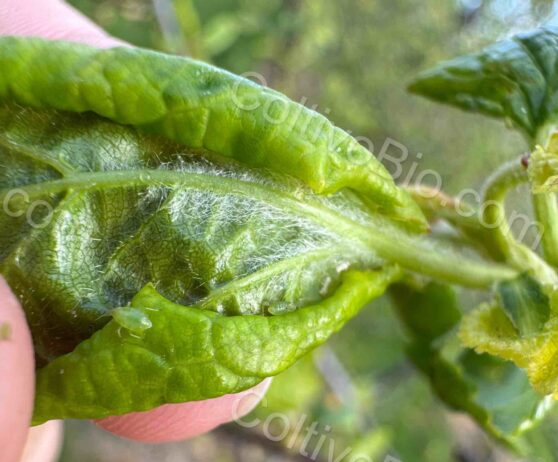
Aphids mainly colonize young leaves and actively growing shoots. While feeding, they pierce plant tissues and inject saliva that alters normal leaf development. The leaves quickly begin to curl, forming a structure within which the colony remains protected.
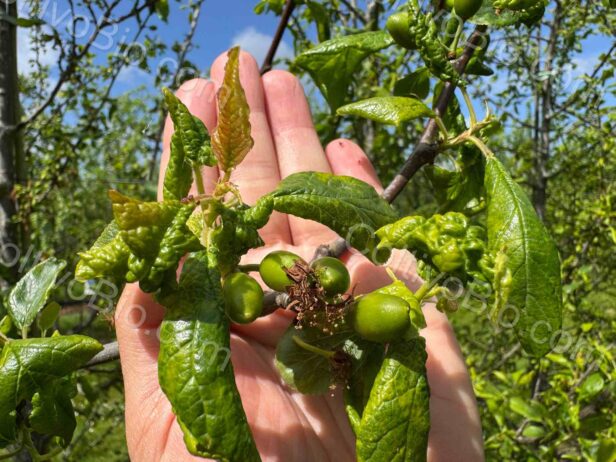
One very important aspect is that damage can continue to appear for several weeks even after the aphids have disappeared. For this reason, severely deformed shoots may be observed even when no aphids can be found inside them anymore (see photo below).
This phenomenon can lead to the damage being confused with diseases or other growth disorders. Severely curled leaves and deformed shoots may instead simply be the consequence of an aphid infestation that occurred several weeks earlier.
Life cycle
Brachycaudus helichrysi overwinters as persistent eggs on Prunus species, generally laid on woody growth near the buds.
As vegetative growth resumes in spring, the eggs hatch and the first colonies begin to form on young leaves. Several generations occur during spring, and the population can increase rapidly.
Winged individuals subsequently appear and migrate to secondary herbaceous hosts, where they spend part of the season. In fall, winged individuals return to Prunus species, where sexual reproduction takes place and new overwintering eggs are laid.
Control
The timing of treatment is critical. Once Brachycaudus helichrysi has caused the leaves to curl, the colony remains protected inside them, and products that act exclusively through contact can no longer effectively reach the aphids.
For this reason, horticultural oil and pyrethrum are not effective against colonies that are already protected inside curled leaves. Increasing the number of treatments with these products once the damage is already evident is unlikely to solve the problem.
Horticultural oil can instead be useful at bud break, with the aim of targeting the overwintering eggs that have spent the winter on the plant, while always following the application rates, timing, and instructions provided on the label of the product being used.
During the growing season, once colonies have already begun to develop, one option is azadirachtin (neem oil). Compared with products that act exclusively through contact, azadirachtin has partially systemic activity, a useful characteristic when aphids begin to protect themselves inside the leaves.
However, it remains essential to treat as early as possible. Once plant tissues have been damaged, they will not return to normal after the aphids die: deformities may remain visible for several weeks, and it is primarily the new growth that will allow you to assess the effectiveness of the treatment.
Useful insecticides
- Horticultural oil: https://amzn.to/3RYyuap
- Azadirachtin (neem oil): https://amzn.to/4xTkduW