

Rose powdery mildew (white mildew) is a disease caused by the fungus Sphaerotheca pannosa var. rosae. If not treated, this plant disease can cause serious aesthetic damage to rose plants. In the following technical guide we will see how to identify the symptoms and how to treat rose powdery mildew using natural remedies. At the end of the article you will find a list of natural products to fight this disease.
What is rose powdery mildew and how to recognize it
Rose powdery mildew (also called white mildew) is a fungal disease caused by Sphaerotheca pannosa var. rosae, affecting roses and several plants belonging to the Rosaceae family. Together with black spot (see here) and downy mildew (see here), it is one of the three main diseases of roses.
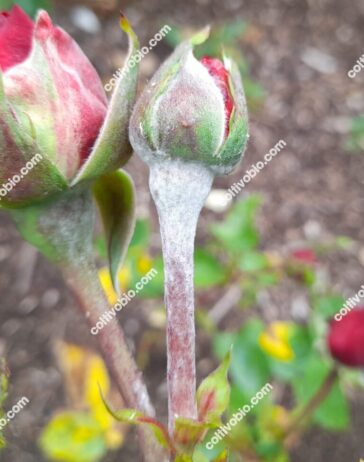
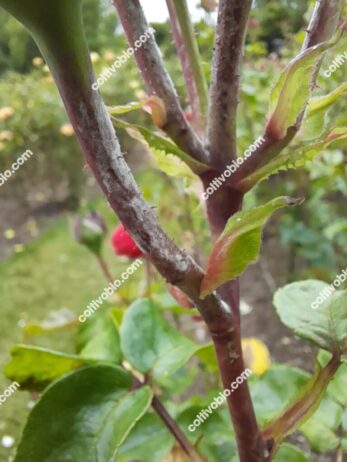
Powdery mildew appears on green plant parts as a white mycelial coating, similar to mold, initially accompanied by discoloration of the affected tissue (see photo above). In advanced stages, the mycelial growth becomes denser and spreads over increasingly large areas. Besides leaves, flower buds and young shoots are also affected (see photos below). In the final stage of the disease, affected parts dry out or remain severely deformed, resulting in aesthetic damage and reduced flowering. In highly susceptible rose varieties, damage caused by powdery mildew can be extremely severe.
Biological cycle of rose powdery mildew
As with most powdery mildew diseases, temperature plays a key role in disease development. Rose powdery mildew develops most actively at temperatures between 20–25 °C combined with high relative humidity. Temperatures above this range tend to slow disease progression.
The disease spreads through the release of conidia (dispersal spores). The white mycelial growth produces large quantities of these spores. During winter, the fungus survives as cleistothecia (survival structures) or as overwintering mycelium on plant residues or among the buds.

How to treat and prevent powdery mildew
It is difficult to control this disease through agronomic practices alone. Good practice includes removing fallen leaves, including those from the previous season, since the overwintering mycelium survives in plant debris. During winter pruning, stems that showed symptoms in the previous year should be removed, as the fungus may survive in buds and initiate new infections in spring. During green pruning, heavily infected stems and green parts should also be removed and destroyed or taken away from the garden.
Direct control mainly relies on treatments with specific active substances. Preventive treatments with sulfur remain one of the main methods for containing the disease and should be applied at the first appearance of symptoms.
Treatments based on the parasitic fungus Ampelomyces quisqualis are also useful, but should not be applied together with sulfur or within five days after sulfur treatment.
Among natural remedies, Bacillus subtilis can be used. Commercial formulations based on this naturally occurring antagonistic bacterium are now available and registered for treatments against rose powdery mildew. These products are approved for organic farming.
Another option is the use of sweet orange essential oil, for which commercial formulations suitable for organic agriculture are currently available.
Finally, treatments based on plant strengtheners (corroborants) may have a secondary effect against powdery mildew. In particular, soybean oil and zeolite have shown suppressive action against the disease.
It should also be remembered that rose varieties differ in their susceptibility to powdery mildew. Avoid planting roses in areas where severe outbreaks have occurred, or choose cultivars with declared tolerance to Sphaerotheca pannosa.
Fungicides and natural remedies to control rose powdery mildew
- Sulfur-based fungicide
- Potassium bicarbonate
- Zeolite
- Concentrated soybean oil