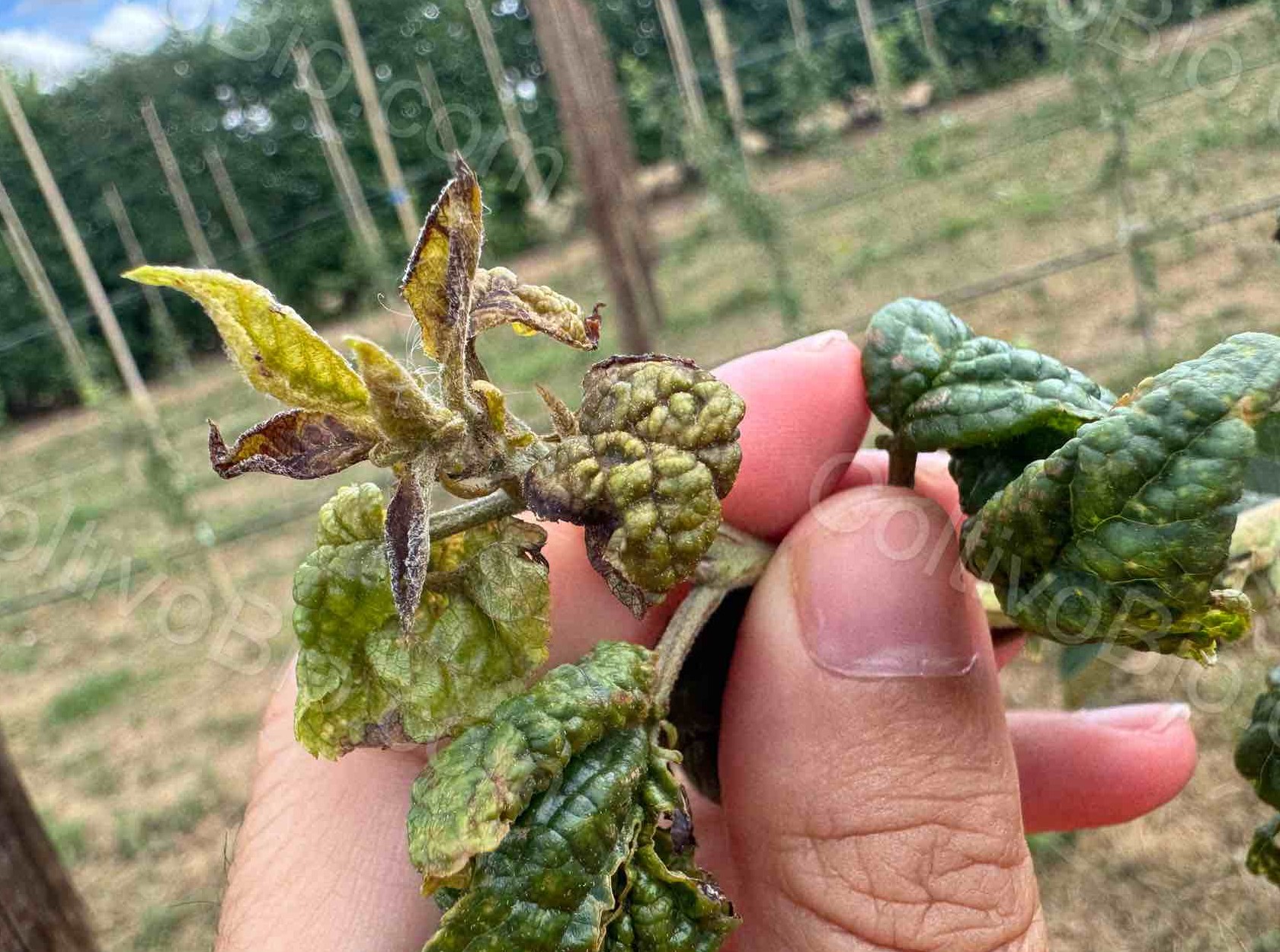

Silver leaf, also known as lead disease or silver leaf, is a fungal disease caused mainly by Chondrostereum purpureum. It can affect numerous tree species, but it is particularly important on stone fruits and especially on plum.
📷 Original photos from the field
The images in this article are original photographs taken personally during monitoring and field observation activities. The symptoms shown therefore refer to real cases observed directly on crops.
identification and damage
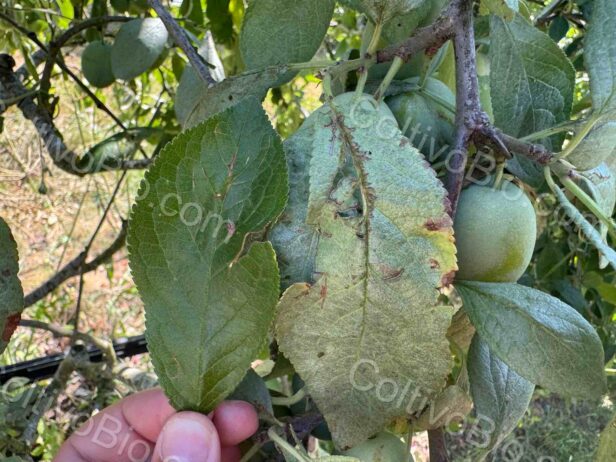
The most characteristic symptom is the appearance of a typical silvery or leaden colour of the leaves. Initially, the phenomenon may affect only some branches, and then progressively spread to other parts of the canopy.
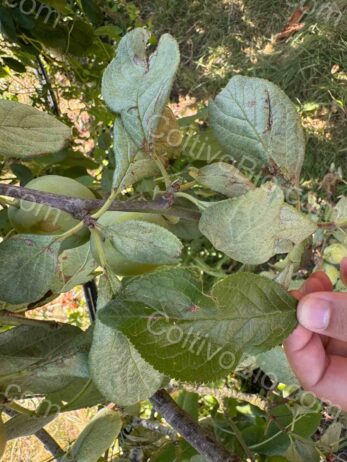
The silvery colour is a consequence of the alteration of the leaf tissues caused by the activity of the fungus. Small air-filled spaces form between the cell layers, modifying the reflection of light and giving the leaf its characteristic silvery appearance.
The fungus mainly colonises the wood, where it can cause alterations and browning of the tissues. By cutting through an affected branch, it is therefore possible to observe alterations in the internal colour of the wood, a useful element to support the diagnosis.
As the disease progresses, reduced vigour, dieback of branches and limbs, and progressive decline of the plant may occur. The characteristic fruiting bodies of Chondrostereum purpureum, generally violet in colour, may also appear on dead or severely affected wood.
It is important to remember that the presence of silvery leaves does not necessarily indicate an infection by Chondrostereum. There is also a false silver leaf, of physiological origin, in which similar leaf symptoms are observed without colonisation of the wood by the fungus.
life cycle
Chondrostereum purpureum survives in infected and dead wood, on which it can produce its fruiting bodies.
Under conditions of high humidity, these release large quantities of basidiospores, which are transported mainly by the wind and can reach new plants.
Infection occurs mainly through fresh wounds in the wood, including those caused by pruning operations. Once it has entered the plant, the fungus progressively colonises the woody tissues and can spread along limbs and branches.
Rain, high humidity and the presence of recent wounds therefore represent particularly favourable conditions for new infections.
control and prevention
The management of silver leaf is mainly preventive, since once Chondrostereum purpureum has colonised the wood, there are no fungicide treatments capable of effectively eliminating the infection from the internal tissues.
It is essential to reduce the risk of infection during pruning, avoiding, whenever possible, making cuts during rainy periods or periods characterised by high humidity, when spore production and dispersal can be high.
Clearly affected limbs must be removed by cutting back to healthy wood. In the case of severely affected plants, where the infection has reached the main structures, complete removal of the plant may be necessary.
Infected or dead woody material should not be left in the orchard, as it can become an important source of spore production and spread.