

Collecting rainwater from the roof of a small garden shed is a simple and inexpensive way to reduce household water use. Even a relatively small roof can collect a considerable amount of water during periods of regular rainfall. The stored water can then be used to irrigate vegetable gardens, ornamental plants, fruit trees, lawns and container-grown plants.
The system requires only a few basic components: gutters, a downspout, a rainwater diverter or filter and a suitable storage tank, commonly called a rain barrel in the United States.
Install the Gutters
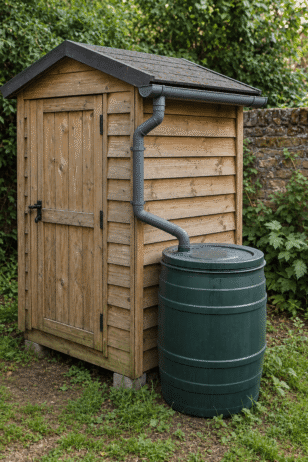
The first step is to install gutters along the lowest edge of the shed roof. Before beginning, check the direction in which the roof slopes and identify the best location for the rain barrel.
The gutter should have a slight slope toward the downspout. This allows the water to flow naturally without accumulating inside the channel. A slope of approximately ¼ inch for every 10 feet of gutter (about 2 mm per meter) is generally sufficient.
Secure the gutter brackets firmly to the fascia board or side of the shed. Space the brackets closely enough to prevent the gutter from bending under the weight of the water. Once the brackets have been installed, attach the gutter sections and check that all joints are properly sealed.
Connect the Downspout
Install a gutter outlet at the lowest end of the gutter and connect it to a downspout. The downspout carries the collected rainwater from the roof into the rain barrel.
Secure the downspout to the wall of the shed using suitable clips. Depending on the position of the barrel, you may need to install elbows to direct the pipe toward the inlet.
A rainwater diverter can be fitted directly to the downspout. This device sends rainwater into the barrel and, once the barrel is full, allows excess water to continue through the original drainage system.
Alternatively, the downspout can discharge directly into the top of the barrel, provided that a separate overflow outlet is installed.
Install a Filter
Leaves, moss, small branches, insects and other debris can be washed from the roof into the collection system. For this reason, it is advisable to install a filter at the gutter outlet, inside the downspout or at the rain barrel inlet.
The filter helps prevent blockages and reduces the amount of organic material entering the barrel. This is important because decomposing leaves can produce unpleasant odors and reduce the quality of the stored water.
Place a fine screen over every open inlet. In addition to trapping debris, the screen prevents mosquitoes and other insects from entering and breeding inside the barrel.
For a more efficient system, consider installing a first-flush diverter. This device discards the first portion of water collected during a rainfall event, which normally contains most of the dust, bird droppings and debris that have accumulated on the roof.
Position the Rain Barrel Correctly
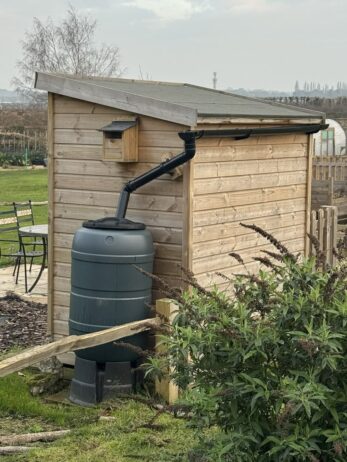
Place the rain barrel on a firm, flat and stable base. Water is extremely heavy. One gallon (3.78 liters) of water weighs approximately 8.34 pounds (3.78 kg). A full 55-gallon (208-liter) rain barrel therefore contains about 459 pounds (208 kg) of water, excluding the weight of the container itself.
The base can be made from concrete blocks, pavers or another material capable of supporting the full weight. Raising the barrel approximately 12 to 18 inches (30 to 45 cm) above the ground makes it easier to position a watering can beneath the faucet and slightly improves water pressure.
Make sure the barrel is stable and cannot tip over. It should never be placed directly on loose or uneven soil. If children have access to the area, consider securing the barrel to the shed or another stable structure.
Whenever possible, position it in a shaded location. Direct sunlight warms the water and encourages algae growth. An opaque, tightly covered rain barrel is therefore preferable to a transparent or open container.
Install an Overflow Outlet
Every rain barrel needs an overflow system. Once the container is full, excess water must be safely directed away from the shed and its foundation.
The overflow hose can discharge into a drainage area, dry well, rain garden or second storage tank. Do not allow large quantities of water to collect directly beside a wooden shed, as persistent moisture can damage the structure and encourage wood decay.
If additional storage is required, two or more barrels can be connected using a rain barrel linking kit. The containers should generally be installed at the same height so that the water can be distributed evenly between them.
How Much Water Can You Collect?
The amount of water that can be collected depends on the roof area and local rainfall. As a general rule, 1 inch (25.4 mm) of rain falling on 1 square foot (0.093 m²) of roof produces approximately 0.62 gallons (2.35 liters) of water.
You can estimate the potential amount collected using this formula:
Roof area in square feet × rainfall in inches × 0.62 = gallons of water
For example, a small shed with a roof area of 100 square feet (approximately 9.3 m²) could theoretically collect:
100 sq. ft. × 1 inch of rain × 0.62 = approximately 62 gallons (235 liters)
This means that just 1 inch (25.4 mm) of rain could completely fill a standard 55-gallon (208-liter) rain barrel.
The actual amount collected will be slightly lower because some water remains on the roof, evaporates or is lost through the gutters, downspout and filtration system. Nevertheless, even a small garden shed can collect a useful quantity of water after a relatively short period of rain.
For readers using the metric system, the calculation is even simpler. One millimeter of rain falling on one square meter of roof produces approximately one liter of water.
The metric formula is:
Roof area in square meters × rainfall in millimeters = liters of water
Using the Collected Rainwater
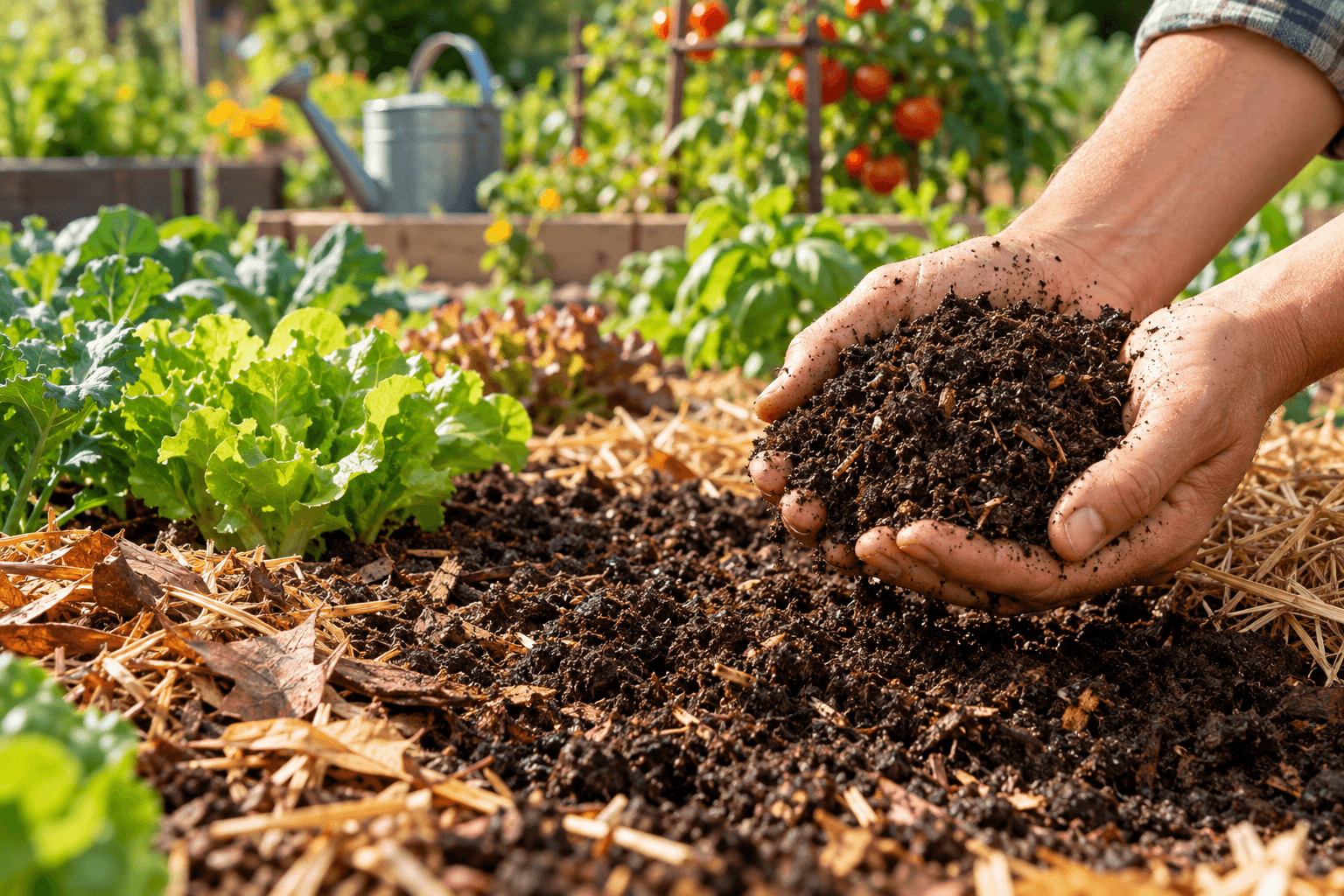
Collected rainwater is particularly useful for garden irrigation. It can be used to water ornamental plants, lawns, shrubs, fruit trees and many garden crops.
Water can be removed through a faucet installed near the bottom of the barrel. A garden hose can also be connected, although the pressure produced by gravity will be much lower than the pressure from a household water supply. Raising the barrel helps improve the flow.
A small pump may be required if the water needs to travel a considerable distance or supply a drip irrigation system. Always check that the pump and irrigation components are suitable for use with stored rainwater.
Rainwater collected from a roof should not automatically be considered safe for drinking, cooking or washing food. Roofing materials may release contaminants, while bird droppings, dust and environmental pollutants can introduce microorganisms or other substances.
Extra care is necessary when using roof-collected water on edible crops. Apply it directly to the soil around the plants rather than spraying it over leaves, fruits or vegetables that will be eaten. Local regulations and public health recommendations should always be followed.

Regular Maintenance
A rainwater collection system requires only simple but regular maintenance. Inspect the gutters periodically and remove accumulated leaves, moss and sediment. Check the filter after heavy storms and clean it whenever the water flow becomes restricted.
Inspect the inside of the barrel for sediment and algae. If necessary, empty and clean it before the main growing season. Make sure the lid remains securely closed, the mosquito screen is intact and the overflow hose is not blocked.
Check the faucet, connectors and hoses regularly for leaks. Small leaks can waste a surprising amount of stored water and may eventually destabilize the ground beneath the barrel.
In areas with freezing winters, follow the manufacturer’s instructions to prevent damage. The barrel may need to be disconnected, emptied and stored upside down before temperatures remain below 32°F (0°C). The downspout should then be returned to its normal drainage position.
With correct installation and occasional maintenance, the roof of a small garden shed can provide a reliable source of irrigation water. A well-designed rainwater collection system reduces dependence on treated household water, limits stormwater runoff and provides a practical water reserve during dry periods.