

In this technical factsheet, we will explain how to identify and control infestations of the potato aphid, which mainly attacks tomato, potato, and pepper. The correct use of biological insecticides and natural control methods is also discussed.
Description
Anyone who has grown tomatoes or potatoes is aware that these crops are susceptible to attack by an aphid scientifically known as Macrosiphum euphorbiae. This aphid is commonly referred to as the potato aphid, solanaceous aphid, or large aphid. It can attack several plant species belonging to the Solanaceae family, including pepper, chili pepper, eggplant, and ornamental plants.
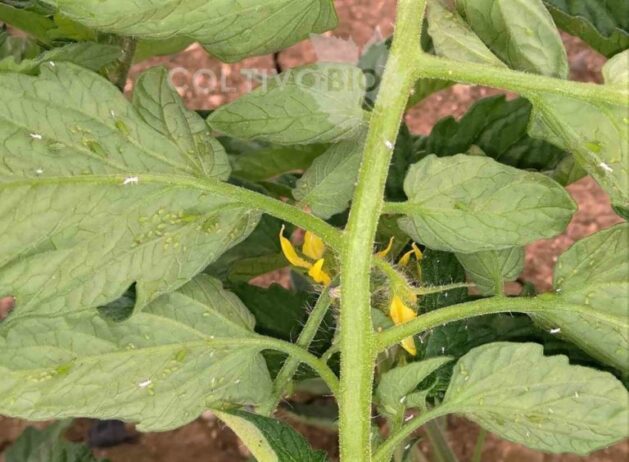
The solanaceous aphid is typically green, allowing it to blend in with tomato and potato foliage (see Figure 1), although reddish individuals may also occur. This species includes both winged forms, reaching about 3.7 mm in length, and wingless forms, which can grow quite large—up to 4–5 mm (hence the name “large aphid”).
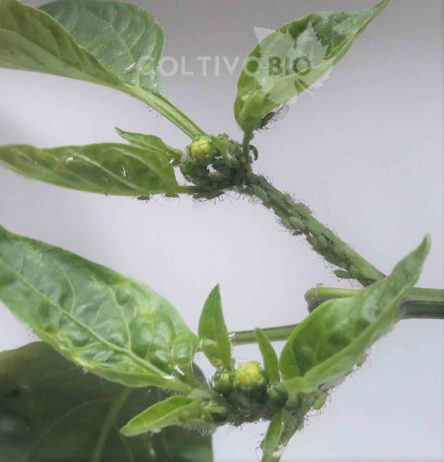
Like all aphids, it has a cauda and two siphunculi, and its antennae are longer than the body. Damage is caused by aphid feeding on plant sap, which leads to plant weakening and the production of honeydew. When young shoots are attacked, they may become deformed and fail to develop properly (see Figure 2).
In addition, Macrosiphum euphorbiae is an important vector of plant viruses, transmitting several viruses to potato crops such as PVY (Potato virus Y), PVA (Potato virus A), and PVM (Potato virus M), and to tomato crops such as CMV (Cucumber mosaic virus).
Life cycle of the potato and tomato aphid
The solanaceous aphid is present throughout the country, especially during the spring–summer period. During winter, it can survive in greenhouses, but more commonly overwinters in small colonies on roses or other ornamental plants.
With the arrival of warmer temperatures, overwintering individuals move onto solanaceous crops, particularly tomato and potato, where they continue their life cycle. This species reproduces mainly by parthenogenesis (without mating).
The optimal temperature for development is around 20 °C. As high summer temperatures set in and populations of natural enemies increase, Macrosiphum euphorbiae on tomato and potato becomes less aggressive.
Biological control and natural remedies
In professional agriculture, this aphid is effectively controlled using treatments based on azadirachtin and pyrethrum. These natural insecticides are generally sufficient to contain infestations of the solanaceous aphid on tomato and potato crops. Their effectiveness can be enhanced by adding white mineral oil, which has a suffocating effect on aphids.
In home gardens or hobby farming, effective natural remedies include potassium soap (soft soap) mixed with vegetable oil. Pyrethrum can also be used as a natural control option in non-professional settings.
If aphids have colonized the lower parts of the plant, care must be taken to thoroughly spray hidden areas and directly target the insects. In greenhouse conditions, beneficial insects can be released as a natural control strategy. In particular, Chrysoperla carnea and the parasitoid Aphidius ervi are effective against this aphid on tomato, pepper, and chili pepper crops.
In open-field conditions, Macrosiphum euphorbiae is naturally controlled by hoverfly larvae and lady beetles.
Useful websites: influentialpoints.com/Gallery/Macrosiphum_euphorbiae