

What is Pythium spp. and how to recognize this disease
Pythium is a genus of oomycetes found worldwide that, under certain conditions, can cause severe damage to agricultural crops as well as turfgrass and lawns. Many Pythium species are saprophytic, meaning they feed on decomposing plant material. Others, however, are plant parasites, many of which behave opportunistically and can live both as saprophytes and as parasites. Several Pythium species cause damage in agriculture; the most important are Pythium ultimum, P. debaryanum, and P. irregulare. In recent years, the species Pythium aphanidermatum has been detected in Italy on spinach, first appearing in 2014 in the province of Salerno.
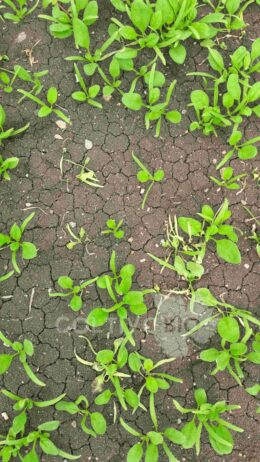
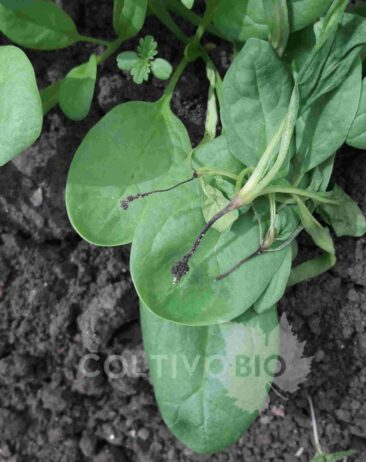
Plants attacked by Pythium initially show slowed growth and chlorosis. After a few days, the plants begin to exhibit leaf wilting, especially during the hottest hours of the day. These symptoms disappear during the cooler hours, such as at night, only to reappear in subsequent days with increasing intensity until the plants completely collapse and dry out at ground level (see Figure 1). Examination of the root system of affected plants shows compromised roots with evident drying and dark-colored necrosis. The root tissues disintegrate when touched (see Figure 2). At first, these symptoms can be mistaken for attacks by the dipteran Delia platura (see technical datasheet), but a quick examination of the root system and the absence of larvae in the roots can remove any doubt.
Pythium generally attacks young seedlings and seedbeds, which is why this disease is known as “seedling damping-off.” Significant damage is also caused to young turfgrass and lawns, where just a few days after sowing the seedlings may be attacked and show the symptoms described above. On turfgrass, the disease spreads in a leopard-spot pattern, with scattered concentric patches of dieback ranging from a few centimeters in diameter up to areas of 30–40 cm. On mature plants, Pythium attacks are sporadic because lignification of the root tissues makes infection more difficult. In adult plants, penetration by the oomycete can occur only through wounds and micro-injuries. Generally, each individual Pythium species has a wide host range on which it can survive, making management of this pathogen very difficult in intensive horticulture.
Life cycle of Pythium
Pythium can survive in the soil as oospores, sporangia, and zoospores. The oospore is the long-lasting structure of the pathogen and can remain dormant in the soil for more than a year before germinating and invading the host with its mycelium. In Pythium, sporangia appear as swollen hyphae with a dissemination function. Like oospores, they can germinate and form new mycelium, but unlike oospores, sporangia (as well as zoospores) have a shorter lifespan in the soil. Finally, sporangia can form zoosporangia, structures inside which zoospores are produced. Once released into the soil, zoospores can move through the water film thanks to their flagella and reach host plants by following chemical signals emitted by plant root exudates (see Figure 3).

Control and prevention of seedling damping-off
Many Pythium species are opportunistic pathogens and cause serious damage when certain conditions occur. Excessive irrigation and high temperatures are the factors that trigger disease outbreaks. In addition, excessive nitrogen availability also increases disease severity.
Agronomic practices to adopt in order to reduce the disease include:
- Avoid excessive irrigation
- Do not apply nitrogen during germination stages (it favors the pathogen)
- Where possible, use tolerant cultivars or rootstocks
- In greenhouses, avoid excessively high temperatures during germination
- Disinfect nutrient solutions if they are reused (closed systems, hydroponics)
- In open fields, ensure adequate drainage to avoid waterlogging and excessive soil moisture
The adoption of crop rotations does not always give the desired effect, because each Pythium species has a wide host range, including plants from very different botanical families. In conventional agriculture, soil disinfectants and synthetic fungicides can be used. In organic agriculture, biofungicide formulations such as Trichoderma or biological fungicides based on Streptomyces griseoviridis can be applied. Both should be applied preventively, preferably in two or more treatments.