

20-20-20 fertilizer is one of the best-known and most widely used fertilizers in agriculture. The most frequently asked questions concern what it means, the correct application rates, how to use it, and whether it can be used on crops such as tomato and citrus. So, let’s clarify these points. This article contains affiliate links. We may earn a commission from qualifying purchases.
What is 20-20-20 fertilizer?
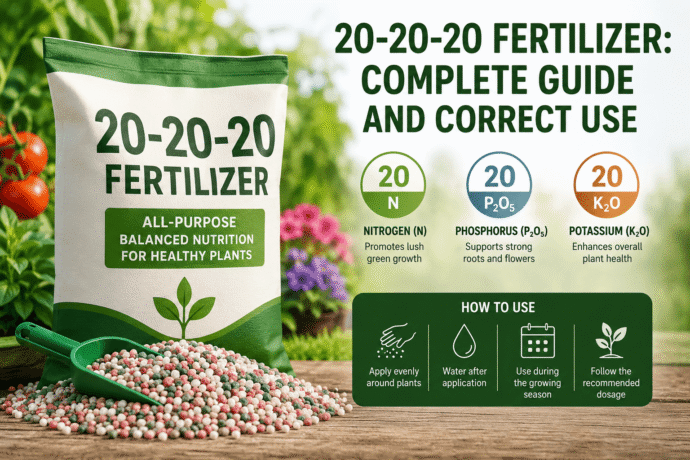
20-20-20 fertilizer is a balanced three-component mineral fertilizer, characterized by the same concentration of the three main nutrients:
- Nitrogen (N) 20%
- Phosphorus (P₂O₅) 20%
- Potassium (K₂O) 20%
This composition makes it a balanced fertilizer with a 1:1:1 ratio, as it provides the essential nutrients for vegetative growth, root development, and plant resistance in equal proportions.
In practical terms, by applying a handful of 20-20-20 fertilizer to a plant, you simultaneously provide 20% nitrogen, 20% phosphorus, and 20% potassium.
What is it used for?
20-20-20 is considered a maintenance fertilizer, meaning that it is suitable for:
- supporting the overall development of the plant
- maintaining a good nutritional balance
- use when there are no specific deficiencies of a single nutrient
It is a highly concentrated fertilizer, with 60% of its weight consisting of nutrients, but at the same time it is a versatile and safe product, suitable for many crops and phenological stages.
Can it be used on tomatoes and citrus?
Yes, 20-20-20 fertilizer can be safely used on both tomatoes and citrus.
- Tomatoes: 20-20-20 is essentially a maintenance fertilizer and can therefore be used throughout the entire growing cycle when there are no specific nutritional requirements. Thanks to its balanced nutrient ratio, it is suitable for virtually any stage of plant growth. However, it can be supplemented with fertilizers providing additional nitrogen during the early vegetative stages and with fertilizers richer in potassium during the later stages of the crop cycle, particularly during fruit development and ripening.
- Citrus: useful for supporting vegetative growth and production, always as part of a balanced fertilization program. In professional agriculture, citrus crops are almost always irrigated; consequently, 20-20-20 fertilizer is applied through fertigation. Naturally, other fertilizers are also used in these systems to provide essential nutrients, such as potassium and the micronutrients needed for fruit ripening.
Naturally, as with all fertilizers, it is always advisable to assess the condition of the soil and crop.
How is it used?
The limitation of 20-20-20 fertilizer is that, in almost all cases (with very rare exceptions), it is sold as a water-soluble product, therefore in powder form, which must be dissolved in water and applied through fertigation. Most 20-20-20 fertilizers can also be applied as a foliar spray by spraying the solution onto the canopy. For this type of use, it is essential to choose products that clearly state this application method on the label and to strictly follow the recommended rates, since excessive fertilizer on the leaves can cause phytotoxicity and burn damage. Because of its powder formulation, 20-20-20 fertilizer is not well suited to broadcast application unless it is formulated as granules, which allow for easier and more uniform distribution.
Application rates: the importance of nitrogen
The main element to consider when calculating application rates is nitrogen, since it is the nutrient that most influences vegetative growth.
Let’s look at a practical example:
- Target: 20 kg of nitrogen per hectare
- Fertilizer used: 20-20-20 (20% nitrogen)
Since the product contains 20% nitrogen, to supply 20 kg of N it will be necessary to apply:
100 kg of fertilizer per hectare.
In fact: - 100 kg × 20% = 20 kg of nitrogen
The same reasoning applies to phosphorus and potassium, which will be supplied in the same amounts.
Warning: if the fertilizer is in a water-soluble formulation, it is rapidly absorbed by plants, and a rate of 100 kg/ha is quite high. The product should therefore be split into several applications, for example three applications of approximately 33 kg each, applied every 15–20 days. Always refer to the label, where the maximum application rates per hectare are indicated.
For use on individual plants or small plots, 20-20-20 fertilizer can be applied dissolved in water at a rate of 1.5–2 g per liter of water. Most products also provide label rates expressed in grams per 100 liters of water, in addition to the rate per hectare.
Using 20-20-20 as a foliar fertilizer
20-20-20 fertilizer, when expressly indicated on the label, can also be used for foliar fertilization. In this case, the product is dissolved in water and sprayed onto the canopy using an airblast sprayer, sprayer, or other foliar application equipment.
The nutrients contained in the fertilizer can be absorbed directly through the leaves, making this type of application particularly useful in situations of:
- rapid nutritional demand
- reduced root system activity
- environmental or physiological stress
Presence of micronutrients
Very often, 20-20-20 fertilizers intended for foliar use are enriched with micronutrients. In addition to the percentages of nitrogen, phosphorus, and potassium, the label may therefore list elements such as:
- iron (Fe)
- manganese (Mn)
- zinc (Zn)
- copper (Cu)
- boron (B)
- molybdenum (Mo)
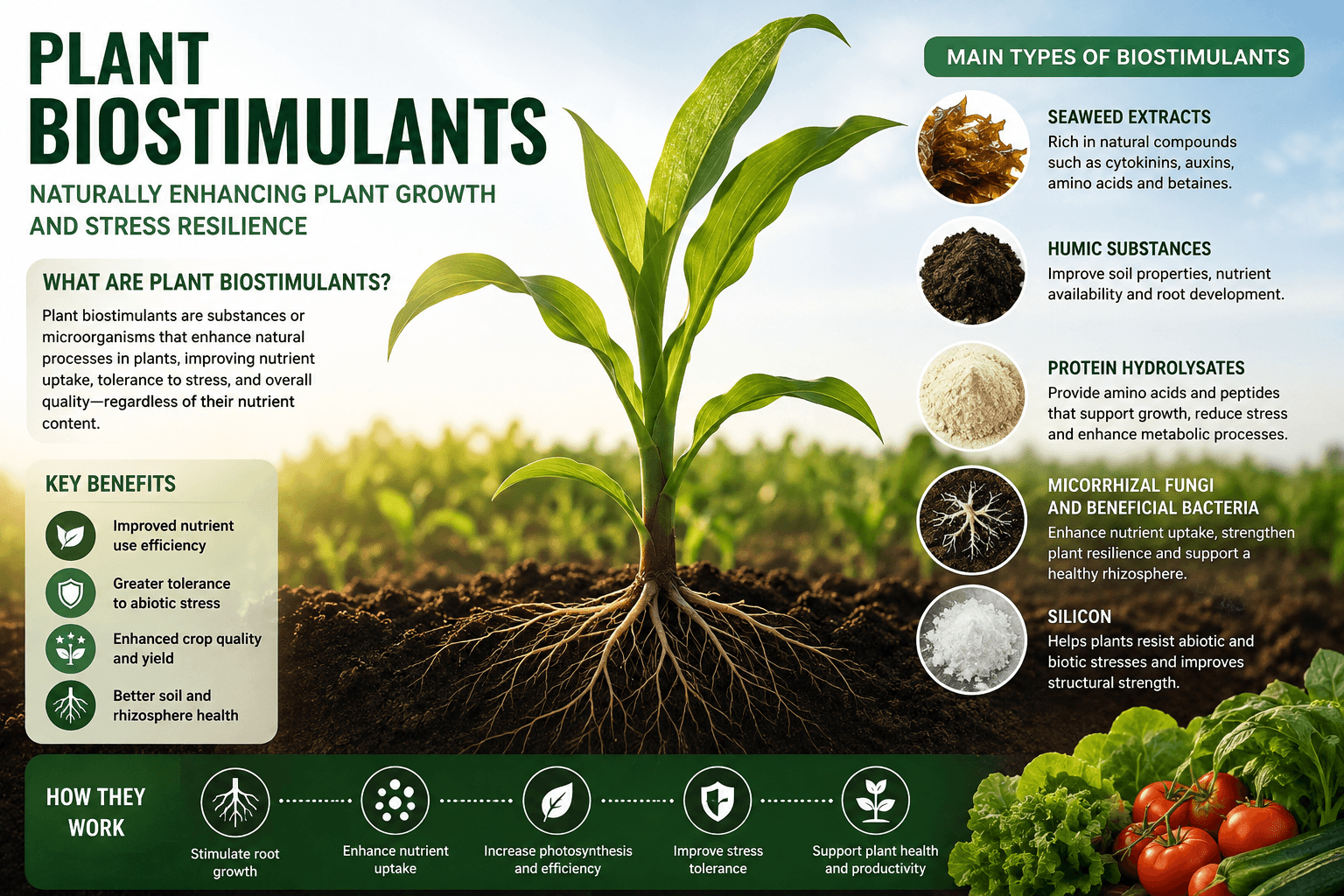
These micronutrients play a fundamental role in plant physiological processes and enhance the effectiveness of foliar fertilization, especially in crops such as tomato trees and citrus, which are often subject to specific deficiencies. Many fertilizers of this type are also formulated with biostimulants (see here what they are), with amino acids and seaweed extracts.
Final recommendations and commercial products in USA
It is essential to always follow the instructions on the label, both for application rates and application methods, checking that the product is specifically authorized for foliar use. Due to the high nitrogen concentration of this product, there is currently no 20-20-20 fertilizer formulation that can be used in organic farming.
- NPK 20-20-20 with micronutrients: https://amzn.to/4xgLyHm
- Classic 20-20-20 all purpose: https://amzn.to/4ghJveU
- Grow More 20-20-20 Water Soluble Fertilizer: https://amzn.to/4xPHFsC