

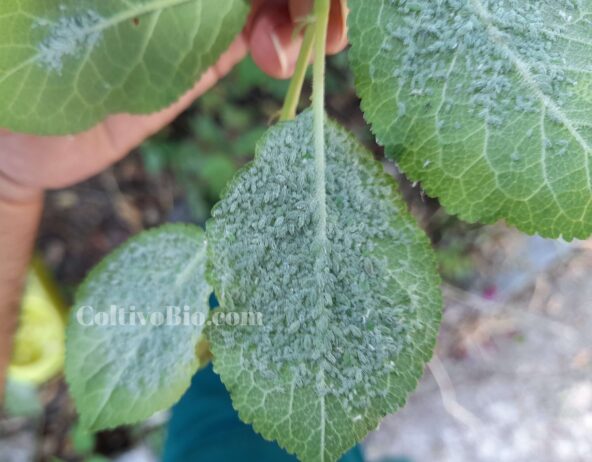
The mealy plum aphid (Hyalopterus pruni), also called the mealy aphid, is a fairly common pest of plum trees. It forms colonies mainly on the undersides of leaves and is easily recognizable by the characteristic whitish waxy secretion that covers the individuals.
 Original field photos
The images in this article are original photographs taken personally during field monitoring and observation activities. The symptoms shown therefore refer to real cases observed directly on crops. This article contains affiliate links. We may earn a commission from qualifying purchases.
Identification and damage
The aphids are light green in color, often almost completely hidden by the whitish wax (see photo below). Colonies can become very numerous and affect large portions of the canopy.
Direct damage is caused by sap removal and, in more severe infestations, can result in yellowing, reduced growth, and premature leaf drop.
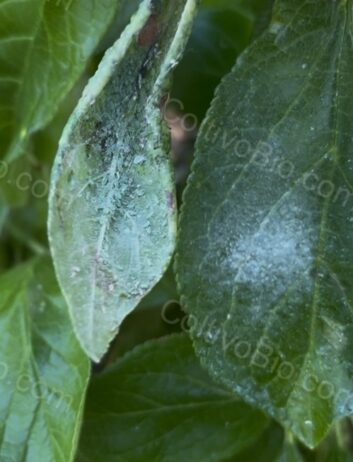
Indirect damage is often more evident. The aphid produces abundant honeydew, on which sooty mold subsequently develops. Leaves and fruits can therefore become covered with a blackish coating that, especially close to harvest, can compromise the commercial quality of the crop.
Life cycle
Hyalopterus pruni generally overwinters as an egg on Prunus species. In spring, with the resumption of vegetative growth, the first generations emerge and the colonies increase rapidly.
Between late spring and summer, winged forms appear and migrate mainly to reeds (Phragmites), which are used as secondary hosts. In fall, winged individuals return to Prunus species, where sexual reproduction takes place and overwintering eggs are laid.
Monitoring and beneficial insects
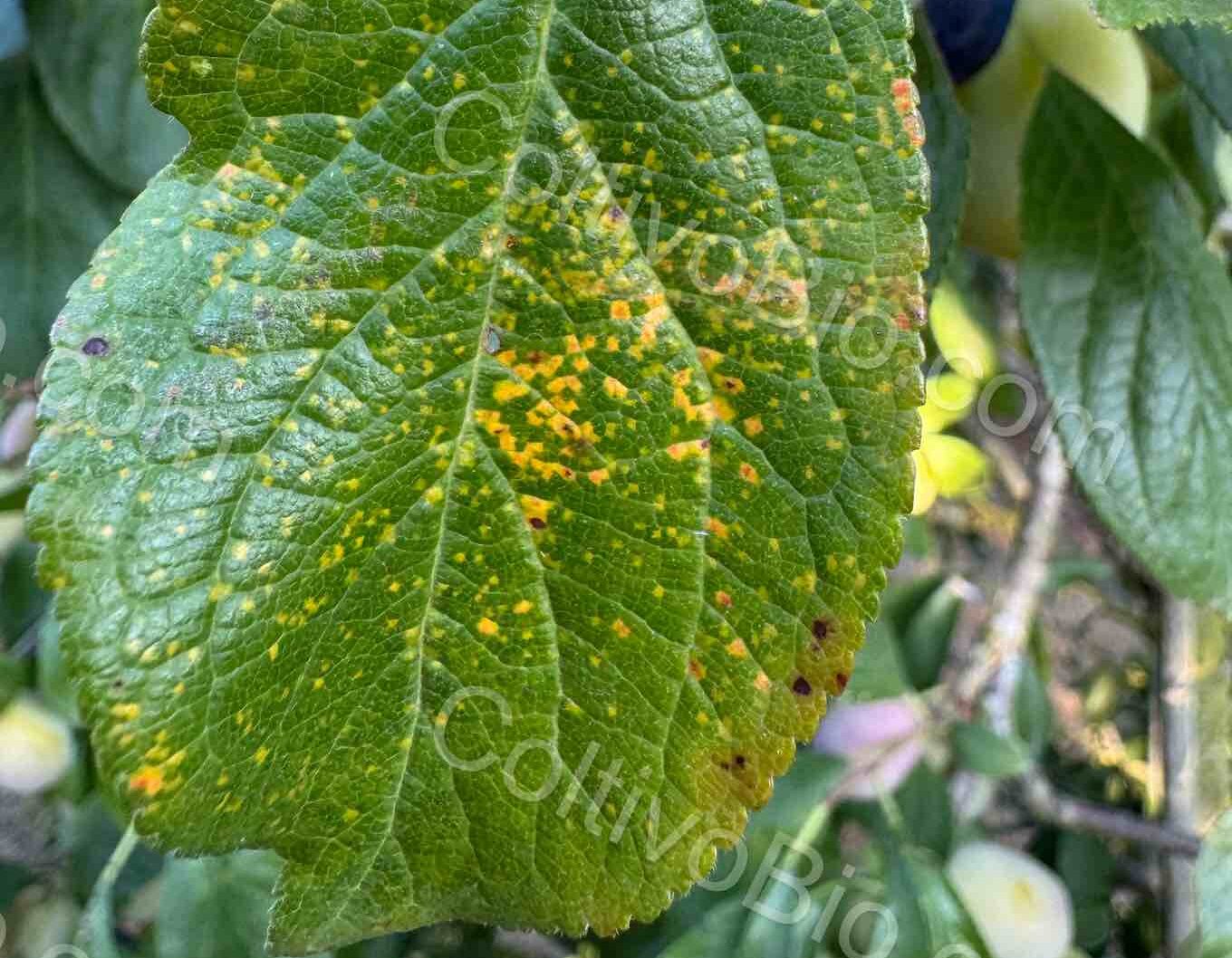
Monitoring should begin by observing mainly the undersides of the leaves, trying to identify the first colonies before they produce large amounts of wax and honeydew.
Before treating, it is important to check for the presence of beneficial insects. Ladybugs, hoverfly larvae, lacewings, and Aphidoletes aphidimyza are important aphid predators. Several parasitoid wasps also contribute to natural control, leaving the characteristic “mummies” of parasitized aphids on the leaves.
When beneficial insects are numerous and the infestation remains limited, an insecticide treatment may therefore be unnecessary or even counterproductive.
Control
Against initial infestations, azadirachtin can be used, an active ingredient extracted from neem that interferes with aphid feeding, development, and reproduction. It is generally more useful when applied early, before colonies reach high densities.
Horticultural oil can also contribute to control, mainly due to its contact action. In this case, it is essential to obtain good coverage of the vegetation, particularly the undersides of the leaves.
As an alternative to horticultural oil, insecticidal soap can also be used.
Natural pyrethrum has a rapid knockdown action and is effective against aphids, but it has the major limitation of being not very selective toward beneficial insects. Its use should therefore be carefully evaluated when ladybugs, hoverflies, lacewings, and other natural enemies are present.
The best strategy therefore remains to treat the first colonies. Unlike the leaf-curling plum aphid (see here), this aphid does not curl the leaves and therefore also allows the use of contact insecticides.
Useful insecticides
- Horticultural oil: https://amzn.to/3RYyuap
- Insecticidal soap: https://amzn.to/4wCz0Jd
- Pyrethrum: https://amzn.to/467ifej
- Azadirachtin (neem oil): https://amzn.to/4xTkduW