

Plum rust is a fungal disease caused by fungi belonging to the genus Tranzschelia, including Tranzschelia pruni-spinosae. It mainly affects the leaves and is generally a mid-to-late season disease, which can become important during the second part of the growing season.
📷 Original photos from the field
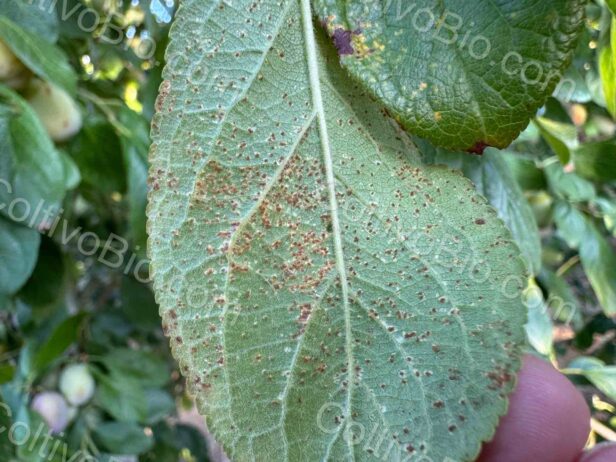
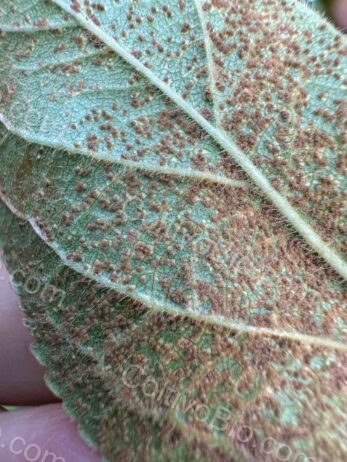
The images in this article are original photographs taken personally during monitoring and field observation activities. The symptoms shown therefore refer to real cases observed directly on crops.
Identification and symptoms
The first symptoms are the appearance of small yellowish spots on the upper surface of the leaves. By examining the underside, it is possible to identify the most characteristic symptom of the disease: numerous rust-brown pustules, containing the spores of the fungus.
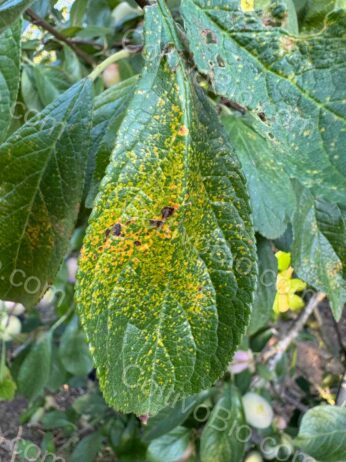
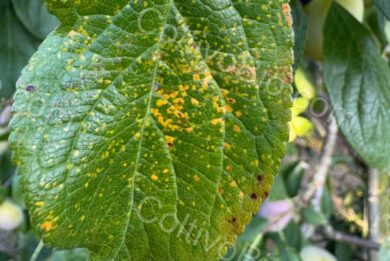
As the infection progresses, the spots increase, the leaves turn yellow and may fall prematurely. Premature leaf fall represents the main agronomic damage, as it reduces the photosynthetic surface and can weaken the plant and reduce the accumulation of reserves.
Life cycle
The life cycle of species belonging to the genus Tranzschelia can be complex and, in some cases, involve alternate hosts, including plants belonging to the Ranunculaceae family.
During the season, urediniospores are produced on infected leaves and are responsible for the spread of the disease and subsequent secondary infections. Under favourable conditions, several infection cycles can therefore occur, resulting in a rapid increase in the presence of rust in the orchard.
The disease is favoured mainly by high humidity and prolonged leaf wetness, while symptoms generally become more evident from mid-season onwards.

Monitoring and control
Monitoring is mainly visual. In addition to the yellowish spots on the upper surface, it is essential to check the underside of the leaves for the characteristic rust-coloured pustules.
From a practical point of view, thinning the canopy is not an effective technique for controlling plum rust. However, an excessively dense canopy should still be avoided because it can hinder the correct distribution of treatments and prevent the fungicide from reaching all green parts uniformly.
In organic farming, plum rust control is mainly based on products with preventive activity, such as copper and sulphur, to be used before infection becomes established. Bacillus subtilis and Bacillus amyloliquefaciens can have a secondary action against rust, but they do not represent specific solutions for the direct control of this disease.
In conventional farming, fungicides with different modes of action are available, including products with preventive activity and products that also have curative activity, which can provide greater flexibility in managing infections. The choice must, however, be made by checking the products actually authorised for use on plum against rust in the country of cultivation and always following the instructions on the label.