

Phomopsis cane and leaf spot, caused by Phomopsis viticola, is a fungal disease commonly found in many grape-growing regions and particularly favoured by cool, wet spring conditions. Although it often receives less attention than downy mildew and powdery mildew, Phomopsis can cause significant damage to young shoots and negatively affect vineyard productivity.
Symptoms of grapevine phomopsis
The most characteristic symptoms are observed on young shoots and canes. During the early stages, small dark necrotic lesions appear, often concentrated on the basal portion of the shoots (see photo below). As the disease progresses, these lesions may enlarge, causing cracking and splitting of the affected tissues.
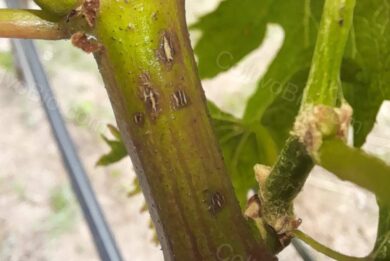
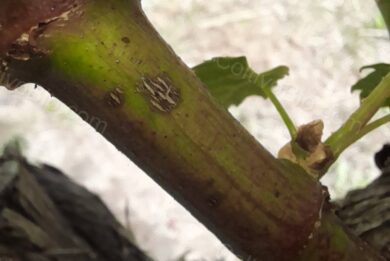
On lignified canes, discoloured areas and numerous small black dots may be observed. These structures, known as pycnidia, are the fruiting bodies of the fungus and serve as a source of inoculum for future infections.
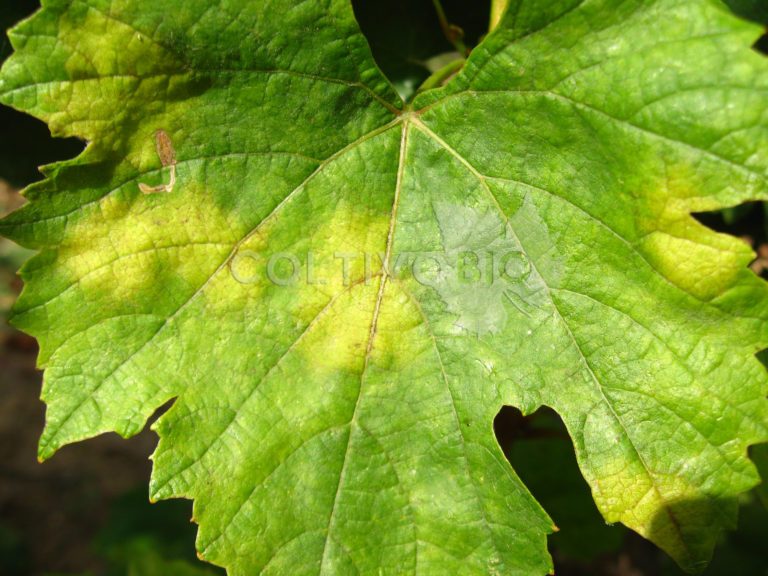
Leaves may also develop small necrotic spots associated with the veins (see photo below), although the most evident symptoms are generally those observed on the shoots.
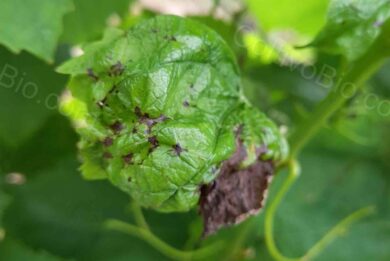
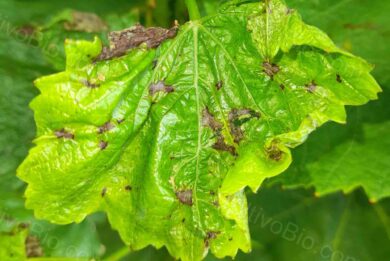
In severe cases, Phomopsis can weaken shoots, reduce bud fertility and decrease vine vigour.
Repeated infections over several years may also affect wood quality and increase the amount of inoculum within the vineyard, making disease management more difficult in subsequent seasons.
Disease cycle
The fungus primarily overwinters in infected canes that remain on the vine or in plant debris left in the vineyard.
With the arrival of spring and the first rainfall events, pycnidia release spores that are spread by rain splash. Infections occur mainly on young, actively growing tissues, which are particularly susceptible during the early stages of vegetative growth.
The environmental conditions that favour disease development include relatively low temperatures combined with frequent rainfall and prolonged periods of leaf wetness.
Control
Prevention is one of the most effective tools for managing grapevine phomopsis.
It is important to remove heavily infected canes during pruning operations, thereby reducing the amount of inoculum present in the vineyard. Proper canopy management also promotes air circulation and accelerates drying of the vegetation following rainfall.
Treatments against phomopsis should be applied preventively, as once symptoms become visible it is no longer possible to eliminate the infection already established within the plant. The most important timing for disease control coincides with the early stages of shoot development, particularly between bud swell and the first few centimetres of shoot growth.
Infections are favoured by frequent rainfall and prolonged wet conditions. For this reason, vineyards with a history of phomopsis should be carefully monitored during spring, and susceptible tissues should be protected during the most critical growth stages.
In organic production systems, disease management relies mainly on copper-based products, integrated with sound agronomic practices such as the removal of infected wood and appropriate canopy management.