

Roses can host several aphid species in spring and summer; the most common is usually Macrosiphum rosae. This rose aphid can reach up to 3.5 mm in length, and its color ranges from pink to green. It can form dense colonies and produce large amounts of honeydew.
Symptoms
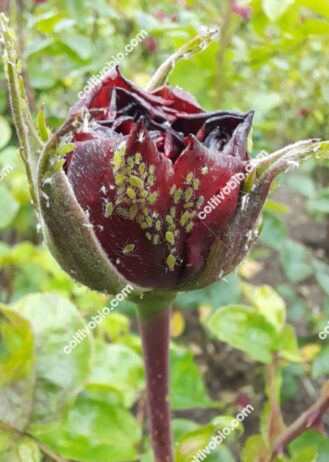
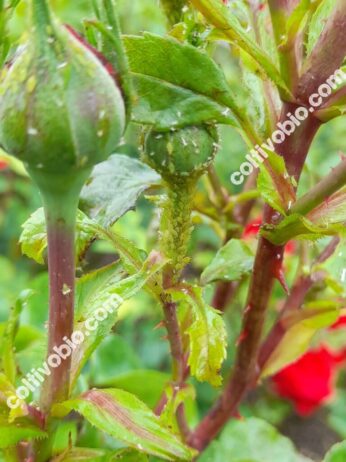
Rose aphids cluster on flower buds, shoot tips, and young foliage (see photo below). Their presence is also indicated by shed skins (exuviae), visible as white, empty shells found on buds, leaves, and infested flowers.
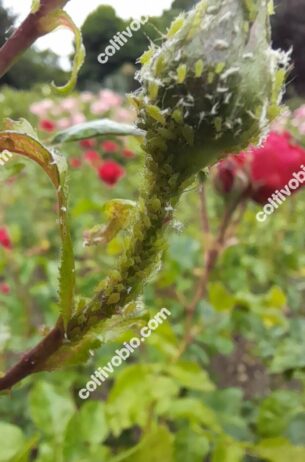
Flower buds and foliage may be covered with honeydew, a sticky substance that aphids excrete as waste.
Black sooty molds may develop on the honeydew.
Affected shoots are less vigorous and prone to deformation.
The rose aphid can range in color from green to pink and can grow up to 3.5 mm long, although most individuals in a colony are smaller. This insect reproduces rapidly, quickly increasing colony size. Both winged and wingless forms are present at the same time.
Aphids form the base of many garden food chains, and it is not unusual to have some present in a healthy, balanced garden ecosystem. It is good practice to inspect roses frequently starting in spring so that action can be taken before a damaging population develops. The natural enemies of Macrosiphum rosae will usually reduce numbers by late summer, although they may not prevent plant damage.
Control
Where possible, on a few plants, aphids can be removed manually by wiping infested areas with a cotton ball.
Several beneficial insects naturally control rose aphids and can be used on larger areas, including:
- Lady beetles (Adalia bipunctata)
- Lacewings (Chrysoperla carnea)
- Aphidius colemani, also widely used in professional greenhouse cultivation through preventive releases and interchangeable with Aphidius ervi
- Hoverflies (Syrphidae)
Keep in mind that in spring, aphid populations often build up before natural enemies become active in sufficient numbers to provide effective control.
Among natural insecticides suitable for home use are natural pyrethrum, vegetable oils, and potassium soft soap, all of which can provide good aphid control. These insecticides have very short persistence and may require reapplication to keep aphid numbers under control. Since they are contact insecticides, they must be applied thoroughly to cover all plant surfaces.
Horticultural oil insecticide (Vegetable and mineral oils), and fatty acid–based products are less likely to negatively affect larger beneficial insects such as adult lady beetles.
The use of garlic macerates is strongly discouraged as an aphid control method. Besides being largely ineffective, the smell is unpleasant for use in homes or gardens—places where far more pleasant scents should prevail.
Professional options include various synthetic insecticides and, in controlled environments, the release of beneficial insects, most commonly Aphidius colemani. It is also possible to use the entomopathogenic fungus Beauveria bassiana, provided that humidity levels are high enough for it to function properly.
Treatments against aphids should be planned while considering the presence of other rose pests that develop at the same time, including the rose sawfly and the rose slug sawfly.
From a crop-management perspective, when multiple pests are present simultaneously, they should be managed with a single, well-planned treatment.

Useful insecticides against rose aphids
- Concentrated pyrethrum
- Ready-to-use pyrethrum
- Mineral white oil
- Potassium soft soap