

Lemon trees can be affected by diseases, insect pests, and mites that damage leaves, fruit, and overall plant health. Many of the pests covered in this guide occur on lemon trees in the United States. This guide helps you identify the most common problems and choose the right control strategy. This article contains affiliate links. We may earn a commission from qualifying purchases.
Lemon diseases on leaves: recognizing the symptoms
Mal Secco
Scientific name Phoma tracheiphila. This is one of the most serious diseases of lemon trees, caused by a fungus that attacks the vascular tissues, leading to the drying out of branches and, in the most serious cases, the death of the entire plant. The fungal disease spreads through conidia, entering through wounds of various kinds, mainly those caused by pruning and weather events.
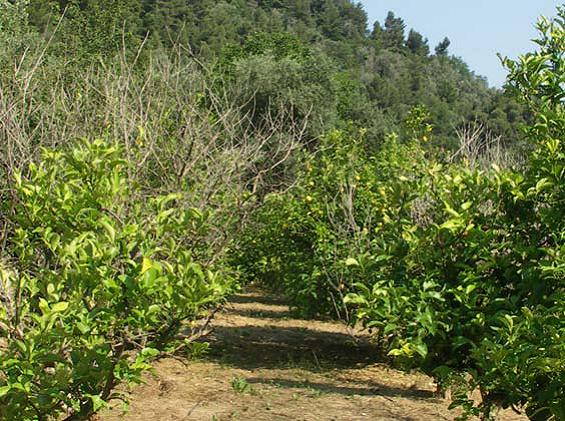
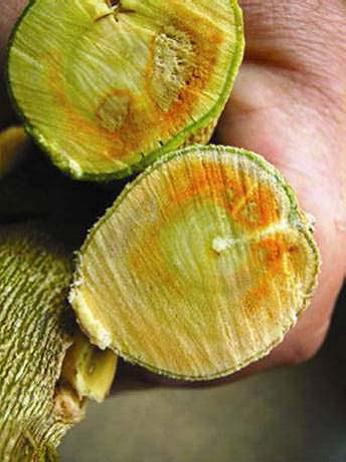
- Symptoms: Yellowing and drying of the leaves with yellowing of the main veins. This is followed by the drying out of the branches starting from the tip. The plant reacts by producing new suckers. If, on the other hand, the infection occurs at root or crown level, the plant inevitably dies. Another typical symptom is the orange-salmon color taken on by the infected wood.
- Control: Targeted pruning to remove infected parts, disinfection of cutting tools, and rapid removal of infected plants and pruning debris. Since this fungus spreads especially during rainy and humid periods, in infected citrus groves it is good practice to postpone pruning until late spring in order to reduce the risk of infection. Copper-based treatments have preventive effects, especially after severe hailstorms or freezes.
Anthracnose
Scientific name Colletotrichum gloeosporioides. This fungal disease causes damage to leaves, branches, and fruit. Orange trees are particularly susceptible, while lemon trees are less susceptible.
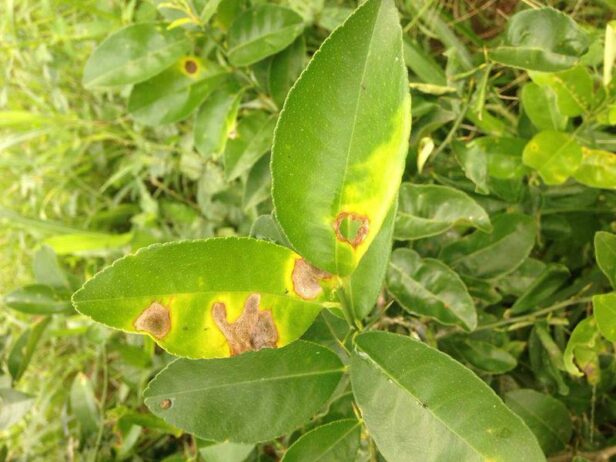
- Symptoms: The presence of irregular spots and dried areas on the leaves and rots on the fruit. The twigs may be affected, developing branch cankers followed by typical dieback. The most easily identified typical symptom appears on the fruit and consists of circular rots with a water-soaked appearance. The peel takes on a dark color from the early stages and is subsequently covered with white mycelium that turns pink during sporulation.
- Control: Removal of infected fruit, including fruit that has fallen to the ground, and preventive treatments with copper-based fungicides.
Phytophthora spp. root rot
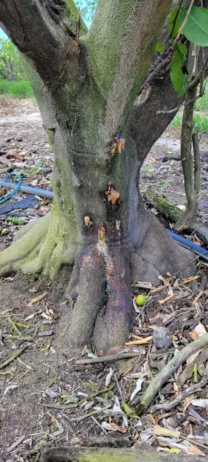
The two main disease-causing pathogens in the Mediterranean environment are Phytophthora citrophthora and P. nicotianae. These pathogens attack the roots and trunk, causing the general decline of the plant. In addition, the fruit may also show typical symptoms.
- Symptoms: This disease appears on the plant in two distinct ways. The first is through gummosis on the trunk and main branches. This symptom consists of gummy secretions oozing from small cracks in the bark. The second type of typical symptom occurs on the roots in the form of root rot. In both cases, the plant suffers and shows yellowing of the leaves, rot at the base of the trunk, and plant decline.
- Control: Improving soil drainage is essential because the pathogens carry out part of their life cycle under saturated soil conditions. Weed growth around the crown must also be avoided because it promotes conditions favorable to the establishment of the disease. The use of resistant or tolerant rootstocks (generally sour orange) is essential; these are the primary means of prevention against this disease. In conventional agriculture, there are some active ingredients that act against this disease, while in organic agriculture, preventive copper-based treatments (such as this one) are essential.
Citrus tristeza virus
It is a disease caused by a virus (Citrus tristeza virus, CTV) currently present in Sicily, Calabria, and Apulia. It is currently the greatest threat to the Italian citrus industry. Sour orange and sweet orange are particularly susceptible. The virus spreads through aphids, especially Aphis gossypii, and through incorrect agronomic practices such as top-grafting. Plants grafted onto sour orange are the most susceptible to this disease.
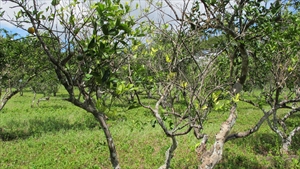
- Symptoms: These can vary greatly depending on the strain of the virus and the cultivated variety. In addition, the disease may have a rapid course that leads to the death of the plant in a short time or a slow course. In general, the affected plant shows yellowing of the canopy followed by defoliation and the formation of small, discolored fruit.
- Control: There is no cure or means of prevention; an affected citrus grove is destined to decline inevitably. The adopted solution is removal followed by replanting with resistant rootstock varieties such as trifoliate orange.
Iron chlorosis
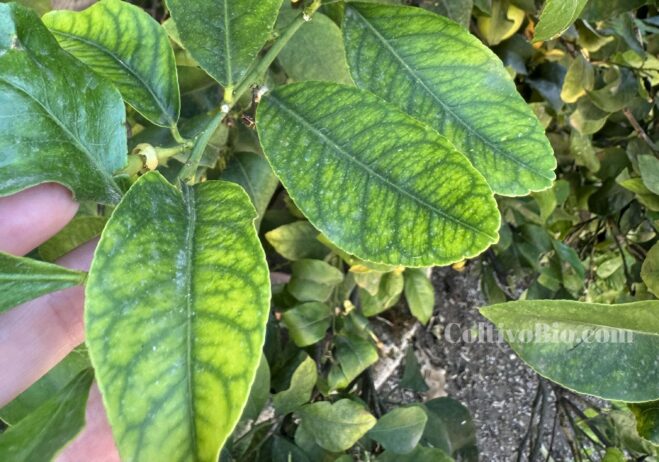
Iron chlorosis is a common nutritional deficiency in lemon trees, especially in calcareous soils with a high pH, where the iron present in the soil becomes poorly available to the plant. The characteristic symptom is the yellowing of young leaves, while the veins remain green. In the most serious cases, growth slows down and the leaves may become almost completely yellow. It can be corrected using iron chelates, preferably applied to the root zone, while simultaneously addressing the soil conditions that limit iron absorption.
Lemon insects and pests
Citrus leafminer
It is a moth (scientific name Phyllocnistis citrella) native to Southeast Asia and is one of the main insects that causes damage to lemon trees and citrus.
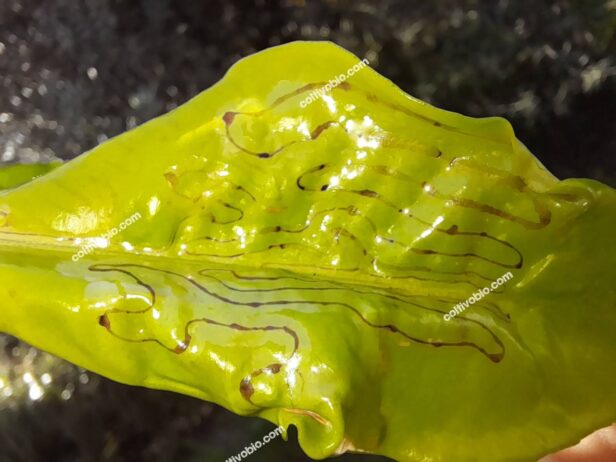
- Damage: The damage is caused by the insect larva, which is able to attack all citrus species, particularly lemon. The damage is caused by the larvae, which dig winding feeding tunnels (mines) that extend over a large part of the leaf blade. Affected leaves curl and dry out; severe attacks reduce plant photosynthesis.
- Control: Systemic insecticides are used in conventional agriculture, while neem oil (azadirachtin) can be used in organic agriculture. Pheromone traps are also widely used for the mass trapping of adults.
- For more information about this insect and other solutions, we invite you to read our complete fact sheet on the Citrus Leafminer (here)
Aphids
These small insects suck sap and transmit viruses. The main aphid that affects citrus is Aphis spiraecola (also called the green citrus aphid), which has the ability to deform shoots. Toxoptera citricida and Aphis gossypii (also called brown aphids) limit themselves to sucking sap and producing honeydew, but gossypii is also the main vector of citrus tristeza virus.
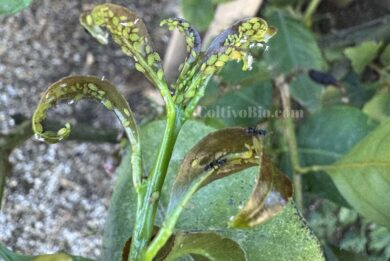
- Damage: Curled and sticky leaves due to honeydew, which promotes the development of sooty mold, resulting in a reduction in photosynthetic activity and soiling of the fruit, which loses commercial value.
- Control: Use of insecticidal soaps or horticultural oils (such as this one). We also mention the use of neem oil (azadirachtin), which is able to control all three types of aphid. On professional farms, the release of predatory ladybugs or parasitoid wasps such as Aphidius colemani is very common.
Scale insects
The main scale insects of lemon are Planococcus citri, Aonidiella aurantii, Coccus hesperidum, Icerya purchasi. These insects feed on sap and can cause indirect damage through the production of honeydew. Their direct feeding activity weakens the plant and causes stunted growth and leaf drop, while the presence of honeydew on the leaves reduces photosynthesis and soils the fruit.
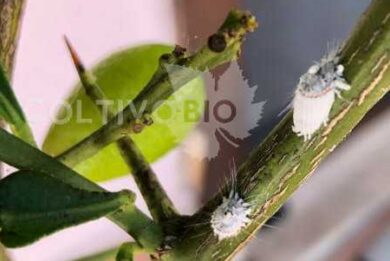
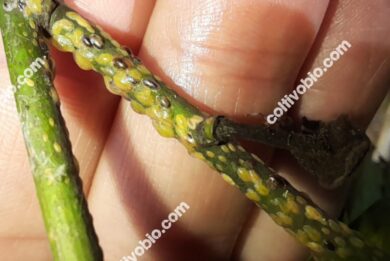
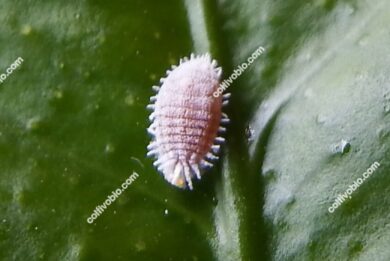
- Damage: Stunted plant growth with reduced production and deformed fruit covered with sooty mold.
- Control: Treatments with horticultural oil and contact insecticides at the time of egg hatch. Manual removal of heavily affected branches.
The subject of scale insects on citrus, including lemon, is quite broad, and the life cycle varies depending on the species. We invite you to read our specific in-depth fact sheet on scale insects, which you can find by clicking the following link: Scale Insects of Lemon and Citrus
Mediterranean fruit fly
Damage from the Mediterranean fruit fly (scientific name Ceratitis capitata) appears only on fruit. The female of this insect uses her ovipositor to pierce the fruit and create a cavity 1–2 mm in diameter in which she lays her eggs. The main damage is caused by the activity of the larvae, which break down the fruit pulp as they grow.
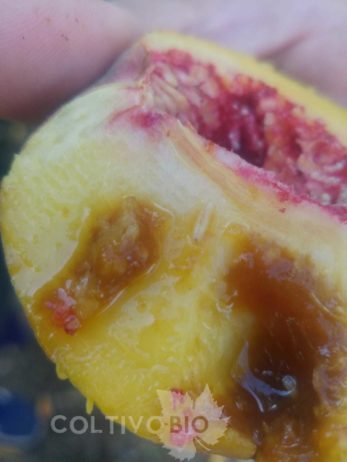
- Damage: Internal fruit rot and premature fruit drop. Secondary pathogens (such as fungi) may become established. A typical fungus that establishes itself on fruit affected by the fly is brown rot.
- Control: A two-pronged strategy is generally used, consisting of attractant traps and the application of insecticides against adults. The traps can be of three types: sticky color traps, pheromone traps, or food-baited traps. When used in large numbers, these allow adults to be caught, thereby reducing the infestation potential. Insecticide treatments with spinosad can also be carried out at times of greatest risk.
- For more information about this pest and other solutions, we invite you to read our complete fact sheet on the Mediterranean Fruit Fly (here)
Two-Spotted spider mite
This mite (scientific name Tetranychus urticae) feeds on the cellular contents of leaves, causing pinpoint yellowing and a loss of plant vigor. Adult specimens can be seen moving on the leaf with the naked eye, while the nymphs and eggs can be seen with the aid of a magnifying glass.
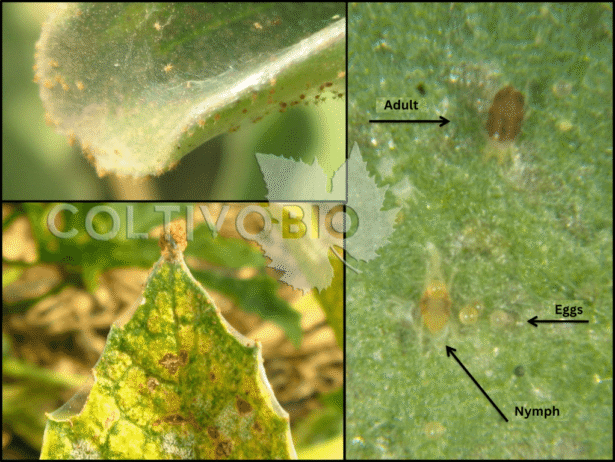
- Damage: Leaves with discoloration and general decline. The affected part subsequently develops into necrosis, passing through a stage in which the damaged area takes on a bronze color. In the end, the leaf drops or loses much of its photosynthetic capacity.
- Control: The active ingredients that can be used include vegetable oils and paraffin oil (see the fact sheet here). These insecticides create a suffocating film on the surface of the exoskeleton of the two-spotted spider mite and its eggs, causing them to die from asphyxiation. Alternatively, insecticidal soap can be used (such as this one). Sulfur (see the fact sheet here), acts as a repellent and helps make the plant less attractive.
- For more information about the pest and other solutions, we invite you to read our complete fact sheet on the Two-Spotted Spider Mite (here)
Orange spiny whitefly
It is a pest native to Southeast Asia that attacks citrus and other plant species. The adult appears as a small fly 1.5–2 mm long, with a dark brown body and black wings with white veins and spots. The black nymphs have white waxy fringes running around the entire edge of the insect. They resemble small black plates found on the underside of leaves.
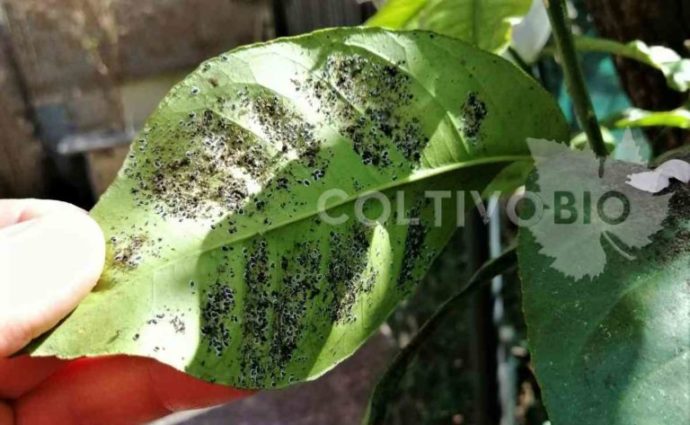
- Damage: The orange spiny whitefly affects host plants by sucking their sap. It also causes indirect damage by producing honeydew, which subsequently leads to the growth of sooty mold on the leaves.
- Control: Control through the spraying of pesticides involves the use of horticultural oils (here is a good product) and potassium soap (you can find it here), in order to act by suffocating the preimaginal stages (juvenile stages) of the insect. Removing heavily infested parts remains useful for containing the infestation.
- For more information about the pest and other solutions, we invite you to read our complete fact sheet on the Orange Spiny Whitefly of Citrus (here)
Woolly whitefly
Aleurothrixus floccosus is among the most common whiteflies that affect lemon trees and is particularly easy to identify because the colonies composed of nymphs are covered with abundant white wax. Affected leaves have characteristic white waxy tufts on their undersides that serve to protect adults and nymphs from predators.
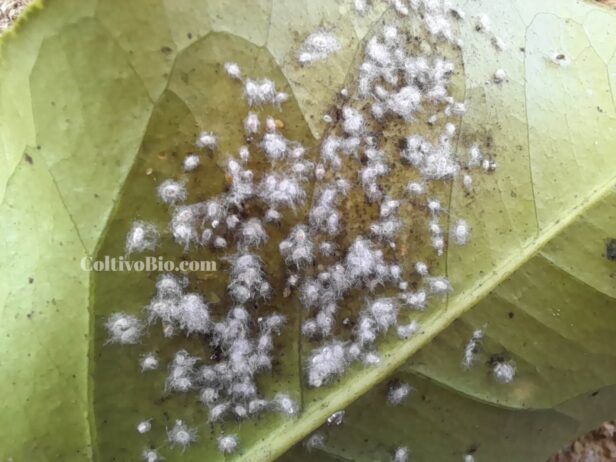
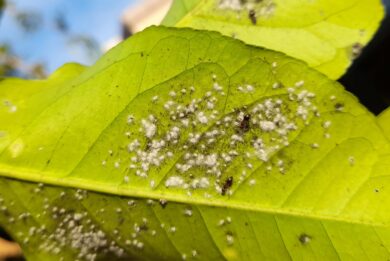
- Damage: Both adults and juvenile stages (nymphs) feed on sap, thereby taking energy away from the plant. At the same time, they produce abundant honeydew that reduces the photosynthetic activity of the leaves and soils the fruit.
- Control: This insect is generally kept under control by its natural enemy, the aphelinid parasitoid wasp Cales noacki. In the case of particularly severe infestations, horticultural oil can be used, applied with a high volume of water.
- For more information about this insect and other solutions, we invite you to read our complete fact sheet on the woolly whitefly of citrus (here).
Products for the control of lemon diseases and pests
- Horticultural oil insecticide: https://amzn.to/4xBBKYw
- Potassium soap insecticide: https://amzn.to/3USZGrT
- Neem oil insecticide (azadirachtin): https://amzn.to/4gJwBXd
- Copper fungicide: https://amzn.to/3V8I1fU
- Pheromone trap: https://amzn.to/4xv6OJu