

Use of sulfur in agriculture
Sulfur has been used as a fungicide for more than 200 years and, due to its characteristics, it remains a widely used plant protection tool today, both in conventional and organic agriculture. Its main use is against powdery mildew diseases (see, for example, tomato powdery mildew (here), and it also has a collateral effect against eriophyid and tetranychid mites (see, for example, red spider mite here).
Mode of action
The activity of sulfur occurs when, once applied to the plant, it changes from a solid state to a vapor state. It therefore sublimates and, in vapor form, is able to penetrate the fungal cell membrane. Inside the cell, sulfur damages the cell membrane, causing dehydration phenomena. In addition, it can replace oxygen as an electron acceptor in respiratory processes, leading to the formation of hydrogen sulfide, which is toxic to fungi.
All these mechanisms are detrimental to fungal survival. Sulfur activity depends on three parameters: temperature, particle fineness, and relative humidity (RH). Sulfur sublimation strongly depends on the commercial formulation, but approximately it begins at around 12 °C and increases as temperatures rise.
Types and uses
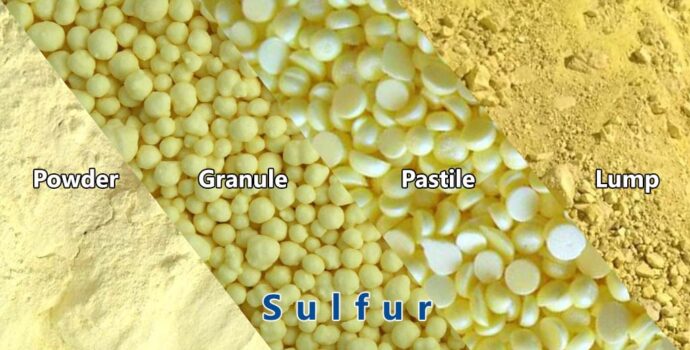
The effectiveness of sulfur increases with finer particle size and low relative humidity. This fungicide is used in formulations for both wettable treatments and dusting applications. Wettable formulations have much finer particles, are characterized by faster action, and have lower persistence. Dusting sulfur formulations are mainly used against grapevine powdery mildew. Ventilated sulfur must be applied using specific machines known as dusters.
Sulfur is a contact (protectant) product, so uniform distribution on the plant is essential for successful treatment.
When using sulfur, attention must be paid to high application temperatures and potential phytotoxicity on certain crops and cultivars. For this reason, treatments are recommended during the early morning hours. It is important to ensure that apple, pear, and peach cultivars are not listed as sulfur-sensitive, as well as some apricot varieties and almost all cucurbit crops. Sulfur is not compatible with mineral oils and must be applied at a safe interval from oil-based treatments.
Commercially available products also include water-dispersible microgranules and sulfur formulations combined with pine oil, designed to reduce phytotoxicity.
You may also be interested in: correct use of the agriculture oil insecticide (here)
Sulfur as a soil pH corrective
Another important use of sulfur in agriculture is as a soil pH corrective. Once applied to the soil, sulfur is converted by bacteria into sulfuric compounds with acidic reaction, causing the soil pH to shift toward more acidic values. As a result, sulfur is used to correct alkaline soils or to acidify soils for crops susceptible to iron deficiency, such as kiwifruit, blueberry (open field), and citrus crops.
Sulfur used for this purpose is usually sold in granular form (see here).
When marketed for soil correction, sulfur is available as granules, flakes, or lenticular forms. It should be applied along the crop row and incorporated into the soil with light tillage. Its corrective effect lasts for several months and represents a valid alternative to acidification with nitric or phosphoric acid, which are not permitted in organic farming, unlike sulfur.