

Aculops lycopersici, also known as the tomato russet mite, is a phytophagous mite belonging to the family Eriophyidae. This microscopic pest represents a serious threat to tomato crops grown both in open fields and in greenhouses, causing significant damage that results in qualitative and quantitative yield losses.
Pest Description
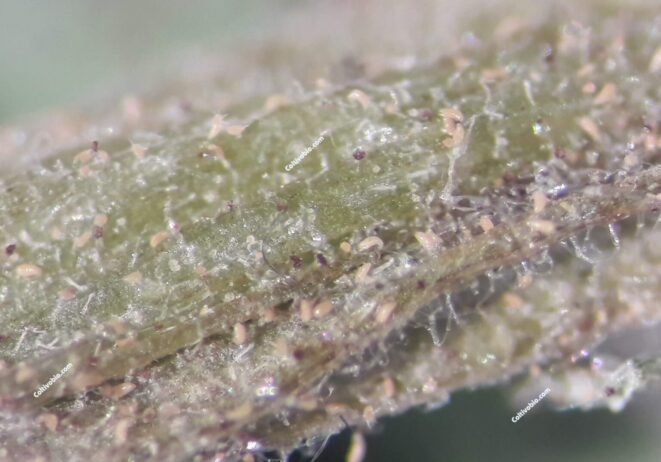
Adults are extremely small mites, about 0.15–0.2 mm long, visible only with the aid of a magnifying lens or a microscope (see photo above). They have a spindle-shaped body, whitish or yellowish in color, with no evident segmentation. They possess two pairs of legs, which is typical of eriophyid mites. Infestations usually begin on the lower leaves and then progress upward along the plant.
The mite feeds on the sap contained in plant cells; as a result, affected leaves and stems develop a bronzed or rusty appearance, followed by progressive yellowing and necrosis (see photo below).
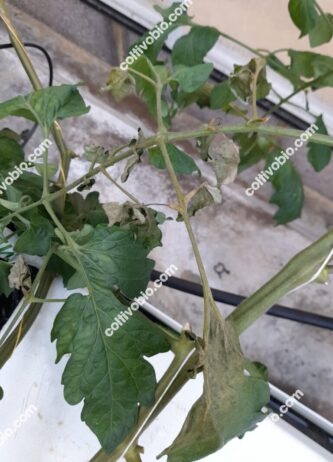
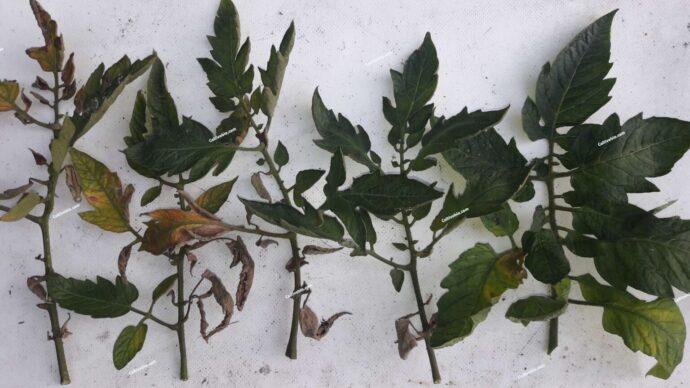
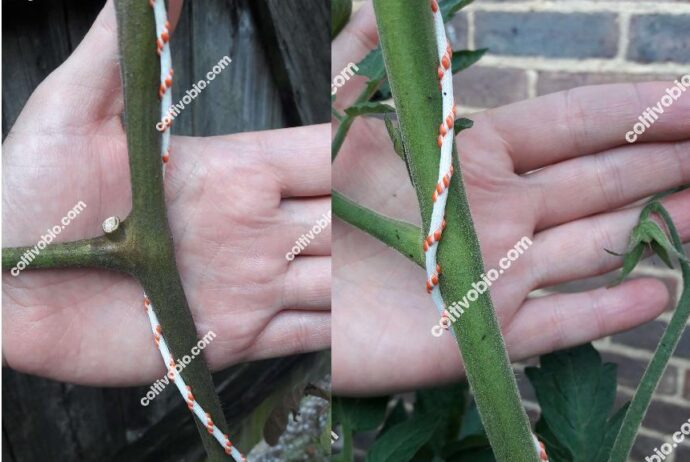
In the most severe cases, complete defoliation of the plant may occur. Another important diagnostic symptom is the discoloration of the stem of affected plants, which takes on a bronze/rusty color (see photo below).
Affected fruits develop a rough, bronzed surface, often with deformities that compromise their marketability.
In severe infestations, fruit set may also be affected, leading to a significant reduction in yield.
→ Don’t forget to read our technical sheet on all diseases and insects affecting tomato crops, available by clicking here
Biology and Life Cycle
Aculops lycopersici completes several generations per year, especially under conditions of high temperatures and low humidity. Under optimal conditions, its life cycle is completed in approximately 7–10 days.
It reproduces rapidly: females lay eggs on the surface of leaves and fruits, particularly near the veins. The mite is active throughout the entire tomato growing season, but infestations become more severe as the season progresses. Mites spread via wind, insects, farm workers, and tools, contributing to rapid population expansion.
It thrives under the following conditions:
- High temperatures (25–30 °C): accelerate the reproductive cycle
- Low relative humidity: favors survival and dispersion
- Plant stress, such as nutritional or water deficiencies, which increases susceptibility to infestation
Monitoring and Prevention
Regular monitoring:
- Frequently inspect plants, focusing on lower leaves and stems
- Use magnifying lenses to detect the presence of mites
Crop hygiene:
- Remove and destroy infested crop residues at the end of the season
- Avoid moving infected plant material between fields or greenhouses; pay attention to the possibility of transporting mites on workers’ clothing
Treatments:
- The use of sulfur is the main preventive and control method against this mite. Treatments with this active ingredient also have side effects on tomato powdery mildew. A good sulfur-based product can be found here.
- Other control methods include contact insecticides such as mineral oils (vegetable or synthetic) and potassium soft soap . These products act by suffocation, coating the mite’s exoskeleton with a suffocating film.