

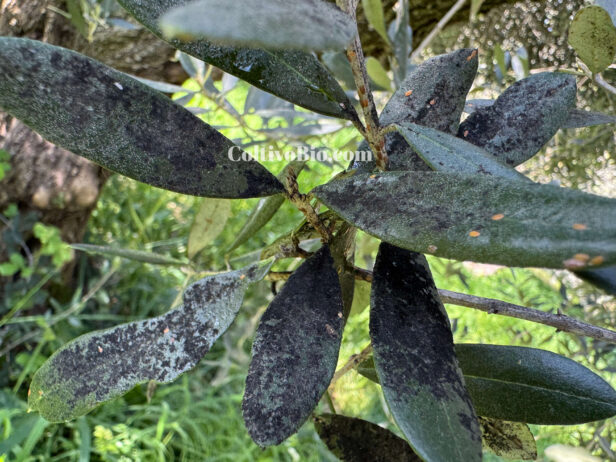
Sooty mold is a fungal condition characterized by the formation of a dark, soot-like coating on the surface of leaves, branches, and fruit. Unlike many other plant diseases, it is not caused by a single specific pathogen, but by a complex of saprophytic fungi that develop on sugary substances present on the plant.
This is a key point: sooty mold is an indirect consequence, not a primary cause.
How it develops
Sooty mold is associated with several fungal genera, including Capnodium, Cladosporium, and Alternaria. These fungi do not penetrate plant tissues but grow on the surface.
Their development is closely linked to the presence of honeydew, a sugary substance produced by sap-feeding insects such as:
Without honeydew produced by these pests, sooty mold does not develop.
Development process
The process can be summarized in three stages:
- Infestation by sap-feeding insects
- Honeydew production
- Surface fungal colonization
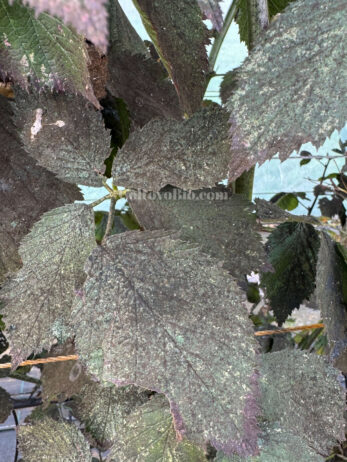
The fungi use honeydew as a food source, forming a black coating that can completely cover plant parts.
Impact on the plant
Although sooty mold fungi are not direct plant parasites, their effects can be significant:
- Reduced photosynthesis. Leaves covered with honeydew and sooty mold can no longer carry out photosynthesis efficiently, causing the plant to progressively lose energy. In certain light and temperature conditions, honeydew may also create a lens effect, concentrating sunlight and damaging tissues, especially young shoots.
- Disrupted gas exchange. Sooty mold covering the leaf surface can interfere with gas exchange. The most critical situation occurs when it affects the underside of leaves, where the stomata are located. However, this is relatively uncommon because honeydew usually settles on the upper leaf surface.
- Reduced visual quality of fruit. Citrus fruit are a typical example: several pests can cause them to become covered in sooty mold, reducing their market value.
- Slower plant growth. The combined effect of honeydew-producing pests and reduced photosynthesis can slow plant growth and, in severe cases, lead to plant death. A typical example is ornamental plants growing beneath pine trees infested with tortoise scale. In these conditions, honeydew production can be so abundant that it promotes heavy sooty mold development. The plants below may become coated with deposits, decline progressively, and die within two or three years if no action is taken.
Diagnosis
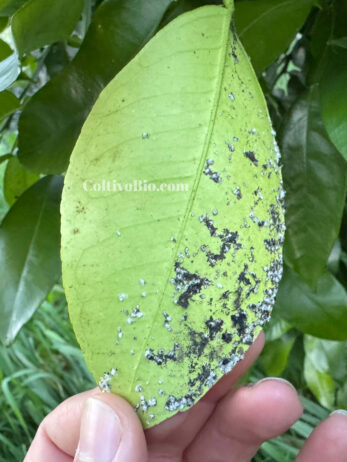
Sooty mold is easy to recognize by:
- a superficial black deposit
- a powdery or crust-like texture
- the fact that it can be removed mechanically or with cleaning products
Unlike many other plant diseases, it does not penetrate plant tissues.
Control strategies
To eliminate sooty mold, you must eliminate the honeydew, and therefore the insects that produce it.
Treating the fungal coating alone is ineffective in the medium term. In the case of a severe infestation, use a strategy that controls honeydew-producing insects while also removing the sooty mold. This helps the plant resume normal growth.
Controlling sap-feeding insects
Specific control strategies are available for aphids, scale insects, and insects in the Aleyrodidae family, such as whiteflies. These are the main honeydew producers.
Leafhoppers can also produce honeydew; however, their populations must reach high levels before they cause significant problems.
How to remove sooty mold
Once the cause has been removed, or alongside insecticide treatments, it is also advisable to treat the sooty mold with:
- water washing
- soft soaps or agricultural cleaning products. Potassium soap is one of the main products used. In addition to its cleaning action, it also has insecticidal activity: it works by contact and kills insects through suffocation (Find it here)
This helps to:
- restore photosynthesis
- improve the plant’s appearance
Growing practices
- Improve canopy airflow. Opening the center of the canopy in citrus trees and removing lower leaves from tomato plants can help reduce pest pressure. These practices make it more difficult for honeydew-producing insects to establish and consequently limit sooty mold development.
- Avoid excessive nitrogen. Excess nitrogen stimulates the production of soft, succulent growth, which is the plant tissue most readily attacked by sap-feeding insects. In home gardens, however, the opposite situation is often found, with plants generally receiving insufficient nitrogen.
- Support plant nutrition. Nutritionally deficient plants are more susceptible to pest and disease problems. Well-nourished plants, by contrast, have a greater ability to withstand stress. Proper fertilization, potentially combined with biostimulants, helps strengthen the plant even when it is already under stress or attack.
- Monitor early. Prevention is better than cure. Acting during the early stages is far more effective than trying to recover a situation that has already become severe.