

Sclerotium rolfsii, also known as Athelia rolfsii, is a soilborne fungus responsible for southern blight, also known as southern stem rot or collar rot. It is an extremely polyphagous pathogen that can infect tomatoes, peppers, eggplants, potatoes, beans, cucurbits, lettuce, strawberries, and numerous other cultivated and wild plants. The disease is particularly dangerous in warm, humid environments. This article contains affiliate links. We may earn a commission from qualifying purchases.
Identification and Damage
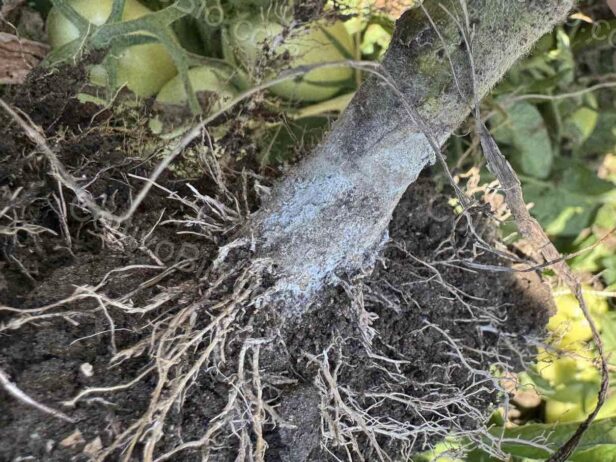
The first symptoms generally appear near the crown or soil line, where a brown lesion characterized by a relatively dry rot develops. The affected tissues deteriorate and break apart but do not become soft unless secondary rots caused by other fungi or saprophytic bacteria develop. The lesion gradually increases in size and may completely girdle the stem.
Damage to the tissues prevents the normal transport of water, causing yellowing, loss of turgor, sudden wilting, collapse, and plant death.
The most characteristic sign is the appearance of abundant white, cottony mycelium around the base of the stem and on the soil surface (see photo above). Small, spherical structures called sclerotia subsequently develop. They are initially white and later become yellowish or reddish brown, resembling small mustard seeds (see photos below).
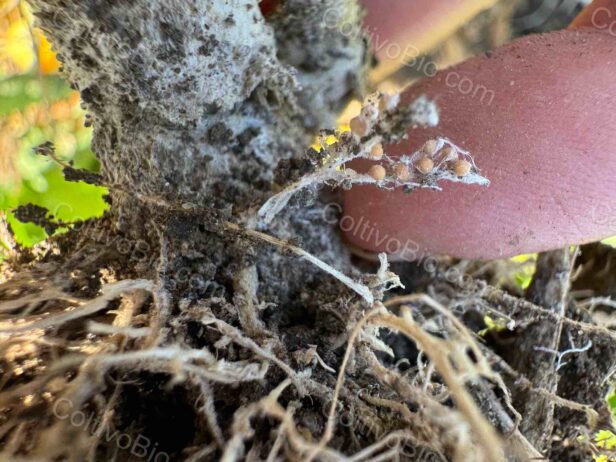
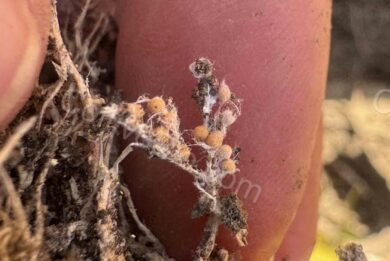
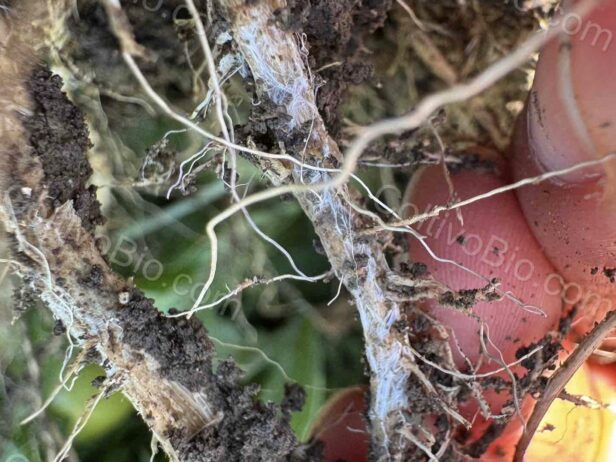
The disease may initially be confused with water stress, Fusarium wilt, Verticillium wilt, or other root rots. However, upon closer examination, the typical white fungal mat can be observed. It is composed of relatively large hyphae that are visible to the naked eye (see photo below), together with the characteristic hazelnut-colored sclerotia. The simultaneous presence of wilting, crown rot, white mycelium, and sclerotia is a clear diagnostic indication of an infection caused by Sclerotium rolfsii.
Disease Cycle
The fungus survives in the soil and in plant debris through its sclerotia. When temperatures are high and moisture and plant tissues are present, the sclerotia germinate and produce new mycelium, which colonizes the crown and causes the tissues to rot.
New sclerotia develop on infected plants, fall to the ground, and provide inoculum for subsequent crops. The pathogen is spread through contaminated soil, transplants, plant debris, irrigation water, tools, containers, and machinery. The most favorable conditions are temperatures of approximately 77–95°F (25–35°C), high humidity, waterlogged soil, and poor ventilation.
This is typically a summer disease favored by high temperatures. During periods of intense heat, the collapse of seedlings and mature plants becomes more rapid and evident, making the disease easier to identify.

Prevention
Prevention is essential because severely affected plants are unlikely to recover. Healthy transplants and growing media should be used, drainage should be improved, waterlogging should be avoided, and drip emitters should not be directed toward the crown.
Plant debris should be removed, host weeds controlled, ventilation improved, and tools, containers, and machinery cleaned. Crop rotation may help, but its effectiveness is limited by the large number of susceptible plant species. In warm climates, soil solarization can reduce the viability of sclerotia present in the upper soil layers.
Control
Infected plants should be removed promptly, together with their roots, plant debris, and, when possible, some of the surrounding soil. Contaminated material should not be incorporated into the soil or added to an uncontrolled home compost pile.
Products containing antagonistic microorganisms, such as certain strains of Trichoderma, can help suppress the pathogen when applied preventively. However, they cannot restore a plant that has already been severely damaged.
In any case, no fungicides used in organic farming provide direct curative control of this disease. The application of copper-based products around the crown may nevertheless provide partial suppression. As previously mentioned, a widely used and proven method is the application of antagonistic microorganisms such as Trichoderma, which are now also commonly used on conventional farms.
Fungicide available online
Mikro-Root, Trichoderma: https://amzn.to/4dwofkV