

Tomato anthracnose is a fungal disease caused by several species belonging to the genus Colletotrichum. It primarily affects ripe tomatoes and can cause significant losses during harvest, storage, and marketing. The disease is especially common under warm temperatures, repeated rainfall, and high humidity.
Symptoms of Tomato Anthracnose
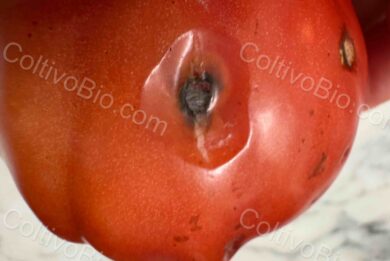
The most characteristic symptoms appear on ripe or overripe tomatoes. Initially, small, circular, water-soaked, and slightly sunken spots develop on the fruit (see photo below). As the infection progresses, the lesions enlarge, become darker, and gradually sink deeper into the flesh.
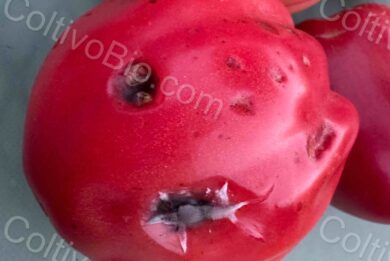
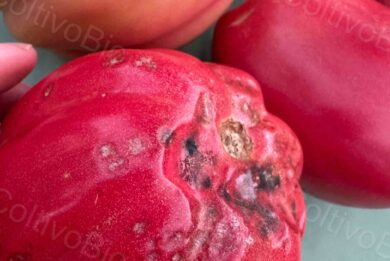
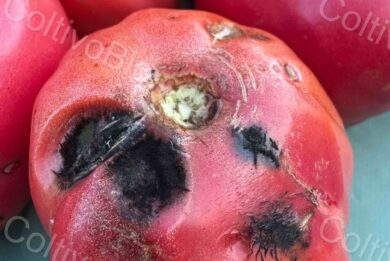
The center of the spots may become tan, dark brown, or nearly black and develop small fungal fruiting structures, known as acervuli, sometimes arranged in concentric rings (see photo below). Under highly humid conditions, cream-colored, pink, or salmon-colored spore masses may appear. Individual lesions can merge, resulting in the rapid decay of the entire tomato.
Green tomatoes may become infected without showing visible symptoms. The fungus remains latent and resumes development as the fruit ripens. For this reason, tomatoes that appear healthy at harvest may develop rot later during storage or marketing. Tomato anthracnose is therefore considered primarily a disease of ripe and overripe fruit.
What Causes Anthracnose on Tomatoes?
The disease can be caused by several species of Colletotrichum. Species associated with tomato include Colletotrichum coccodes, C. dematium, and other species belonging to different taxonomic complexes.
Colletotrichum coccodes can also infect tomato roots, stems, and leaves. On roots, it can produce small black microsclerotia and contribute to the development of a root disease known as black dot root rot. Accurate identification of the species normally requires laboratory analysis because the symptoms produced on tomato fruit can appear very similar.
Disease Cycle and Spread
The fungus can survive in infected crop debris, tomatoes left on the ground, volunteer plants and weeds belonging to the nightshade family, and, in the case of certain species, in the soil and on infected roots.
When environmental conditions become favorable, the pathogen produces conidia. These spores are carried onto tomato plants by splashing rain and overhead irrigation. Tools, hands, and crop operations performed while the plants are wet can also contribute to disease spread.
Free water on the fruit surface promotes spore germination and infection. Conditions that favor tomato anthracnose include:
- mild to warm temperatures;
- high relative humidity;
- frequent rainfall;
- extended periods of leaf and fruit wetness;
- poor air circulation;
- tomatoes touching the soil;
- overripe fruit remaining on the plants.
How to Prevent Tomato Anthracnose
Tomato anthracnose management must be primarily preventive. Once lesions become visible, the affected fruit tissue has already been damaged and cannot be restored.
The following preventive and cultural practices are recommended:
- Rotate tomatoes with crops outside the nightshade family for at least two or three years.
- Remove crop debris, infected tomatoes, and fallen fruit.
- Control volunteer tomato plants and susceptible nightshade weeds.
- Avoid overhead irrigation, especially while the fruit is ripening.
- Use drip irrigation or water plants at their base.
- Apply mulch to reduce soil and water splashing onto the fruit.
- Provide adequate plant spacing and ventilation to improve air circulation.
- Avoid working among tomato plants while the foliage is wet.
- Harvest tomatoes regularly as soon as they ripen.
- Stake, cage, or trellis plants to prevent fruit from touching the soil.
Infected fruit should not be left in the field, home garden, greenhouse, or high tunnel because it can produce additional spores and increase disease pressure.
Susceptibility to tomato anthracnose can also vary among varieties. Cultivars that produce large, fleshy fruit with relatively thin skin—including some oxheart, beefsteak, and heirloom tomatoes—may be more susceptible to lesions and fruit rot, particularly when the tomatoes are fully ripe, cracked, or wounded. Variety selection can therefore contribute to reducing the risk of disease.
Fungicides for Tomato Anthracnose
Fungicides can help protect healthy tomatoes, but they must be applied preventively and combined with appropriate cultural practices. A treatment applied after advanced lesions have developed will not cure fruit that is already infected.
The selection of a fungicide and the appropriate application timing depend on the production system, weather conditions, state regulations, and products currently labeled for use on tomatoes in the United States. During rainy periods, preventive protection may be required while the fruit is developing and ripening.
Copper-based products used for the management of certain bacterial diseases of tomato and tomato late blight may also provide some suppression of anthracnose when the product is specifically labeled for the intended crop and use.
Always read and follow the pesticide label. The label is a legal document in the United States, and product registrations and permitted uses may differ among states. Organic growers should also verify that the selected product is permitted under their applicable organic certification program.
Harvest and Storage
Tomatoes should be harvested carefully to avoid wounds and bruising that may encourage the development of fruit rot. Damaged tomatoes or fruit showing suspicious lesions should be separated immediately from healthy produce.
Harvest containers, tools, and equipment should be cleaned and sanitized. Healthy tomatoes should not be stored together with overripe or affected fruit because anthracnose symptoms can develop rapidly after harvest.
Tomato anthracnose should not be confused with blossom-end rot, a physiological disorder that usually develops at the blossom end of the fruit. It should also be distinguished from bacterial spot and bacterial speck, which normally produce smaller and more superficial lesions.
Frequently Asked Questions About Tomato Anthracnose
Can green tomatoes be infected with anthracnose?
Yes. Green tomatoes can become infected without showing visible symptoms. The fungus may remain latent until the fruit begins to ripen, when the characteristic sunken lesions develop.
Can tomatoes affected by anthracnose be cured?
No. Once the sunken lesions are visible, the affected tissue cannot be restored. Management should focus on protecting healthy fruit and reducing sources of infection.
Does overhead watering increase tomato anthracnose?
Yes. Overhead irrigation can spread spores through water splash and extend the period of fruit and foliage wetness. Drip irrigation or watering at the base of the plants is preferable.
What is the difference between tomato anthracnose and blossom-end rot?
Anthracnose generally causes circular, water-soaked, sunken lesions that may develop dark centers and pink or salmon-colored spores. Blossom-end rot is a physiological disorder that normally appears as a dark, leathery area at the blossom end of the tomato and is not caused by a fungal pathogen.
Should infected tomatoes be removed from the garden?
Yes. Infected and fallen tomatoes should be removed promptly because they can produce spores and increase the amount of disease in the garden or field.