

Curled tomato leaves are one of the symptoms that most frequently concern vegetable growers. Many people also describe the problem as rolled leaves or leaves curling upward. When this symptom appears, a disease is often suspected, but in most cases the cause is much simpler and is related to stress caused by high temperatures and water deficiency.
High temperatures and water deficiency: the most common cause
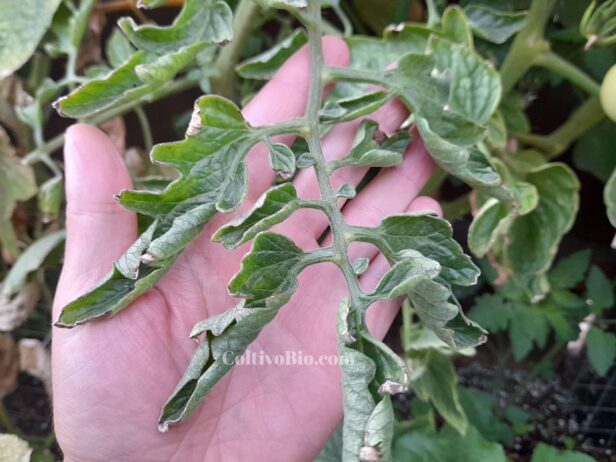
When tomato leaves curl or roll upward, the first suspicion is often fungal diseases, insects, or viruses. In reality, in most cases this phenomenon is simply a normal adaptation response of the plant to unfavorable environmental conditions.
Leaf curl is particularly common during summer, especially during periods characterized by high temperatures, intense sunlight, and limited water availability.
This is therefore a physiological response rather than a disease symptom. Tomato plants are particularly sensitive to water stress.
During very hot days, especially when temperatures consistently exceed 30°C (86°F), water demand increases significantly. If the root system cannot fully compensate for water losses caused by transpiration, the plant activates several defense mechanisms.
One of the most visible responses is leaf curling or rolling. The leaves fold upward, reducing the surface exposed to sunlight and limiting water loss. This mechanism helps the plant cope with stressful conditions.
For this reason, it is normal to observe rolled leaves on otherwise healthy tomato plants during periods of intense heat.
Some varieties curl more easily
Not all tomato varieties respond in the same way.
Some cultivars, particularly indeterminate varieties with abundant vegetative growth, tend to develop curled leaves more readily during hot weather. Therefore, genetics also plays a role in this phenomenon.
This behavior can also be observed on healthy, productive plants and should not automatically be interpreted as a sign of disease.
How to reduce the problem
When leaf curl is caused by environmental stress, its severity can be reduced through proper crop management.
Helpful practices include:
- watering regularly;
- avoiding prolonged periods of drought;
- using organic or plastic mulch;
- avoiding excessive pruning during summer;
- maintaining adequate leaf cover to protect fruits from direct sunlight.
In most cases, the leaves remain curled until environmental conditions improve, without significantly affecting yield.
Physiological curling of older leaves
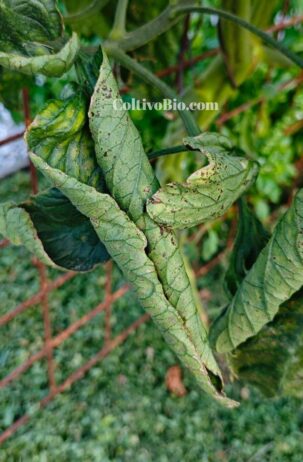
Curled leaves do not always indicate a problem.
In tomato plants, it is normal to observe a gradual decline of older leaves located in the lower part of the canopy as the crop develops.
After contributing to photosynthesis for an extended period, these leaves gradually enter a senescence phase. During this process, yellowing, curling, and eventual drying may occur.
The phenomenon can become more evident when magnesium deficiency is present (see photo above). Since magnesium is a mobile nutrient within the plant, it is translocated from older leaves to younger tissues. As a result, basal leaves may develop interveinal chlorosis, curling, and progressive decline.
When the phenomenon affects only the oldest leaves while new growth remains healthy and vigorous, it is generally not a cause for concern.
Excess nitrogen
Excessive fertilization can also promote leaf curling. Plants tend to develop very vigorous growth, with large, thick, dark-green leaves. Under these conditions, curled or distorted leaves may appear even when water availability is adequate.
Unlike heat-induced leaf curling, which mainly affects older leaves in the lower part of the plant, curling associated with excessive nitrogen usually appears on young leaves and growing tips.
The leaves often become thicker, fleshier, and exhibit a very intense green color. Excess nitrogen may also increase plant susceptibility to certain pests, including powdery mildew.
When to suspect aphids
If leaf curling is accompanied by obvious deformities, it is advisable to inspect the plants for aphids.
These small insects feed by piercing plant tissues and extracting sap. Affected leaves may appear crumpled, distorted, and exhibit reduced growth.
The presence of honeydew and ants is often an important clue.

Spider mites
During particularly hot and dry periods, infestations of spider mites may develop.
In addition to leaf curling, common symptoms include:
- small yellowish speckles;
- bronzing of the foliage;
- reduced photosynthetic activity;
- fine webbing in severe infestations.
Spider mites thrive under the same hot and dry conditions that frequently promote physiological leaf curling.
Viral diseases: a less common but more serious cause
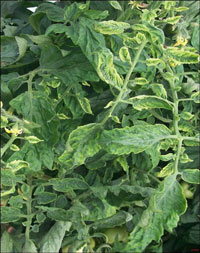
Viral diseases are one of the possible causes of curled tomato leaves, but they are far less common than stress caused by heat and drought.
One of the best-known examples is the Tomato Yellow Leaf Curl Virus (TYLCV), which is primarily transmitted by whiteflies.
In these cases, leaf curling is accompanied by other characteristic symptoms, including:
- stunted growth;
- shortened internodes;
- deformed leaves;
- yellowing;
- poor fruit set;
- reduced productivity.
The simultaneous presence of these symptoms should raise suspicion of a possible viral infection.