

Like all plants, the rose is subject to attacks by pests and diseases caused by fungi and insects. In this practical guide, we provide a general overview of the phytopathologies that damage roses. For each disease or insect, you will find a link leading to a more detailed description, since this technical sheet cannot cover every topic in full. We therefore encourage you to explore the topics that interest you by clicking the relevant links. To help with quick identification, each disease or insect is described with photos and images. The technical sheet is divided into two sections: disease agents (fungi) and damage agents (insects and mites).
Disease Agents: Fungal Diseases
Roses are affected by a wide range of fungi. Below we analyze the most important ones and the remedies used for prevention and treatment. At the end of this section you will find a list of the main fungicides used on roses.
Rose Black Spot
Rose black spot is among the most common rose diseases and is easily identifiable, although inexperienced observers may confuse it with rose downy mildew. Black spot is caused by the fungus Diplocarpon rosae and appears on leaves as roundish spots with irregular edges. These spots are charcoal black or sometimes dark gray. In many cases, the spots show a network of veins radiating from the center outward.
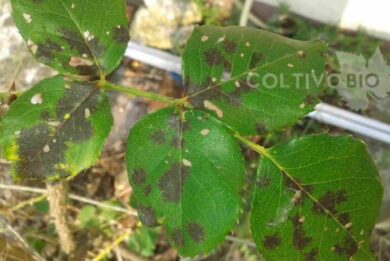
As symptoms progress, leaves lose color and sensitive rose varieties may become completely defoliated.
Preventive measures include removing infected plant parts and keeping them away from the garden. Avoid overhead irrigation, since humidity plays a key role in disease development. Copper-based products are the main preventive treatment. Sulfur has a weaker secondary effect and is mainly used against powdery mildew. In areas highly favorable to the disease, rose varieties tolerant to black spot should be preferred. Soy lecithin can also be used as a strengthening agent to increase plant resistance.
For the complete technical sheet on this disease and additional solutions, we invite you to read our full technical Rose black spot (here).
Rose Downy Mildew
This plant disease is caused by the fungus Peronospora sparsa, which attacks cultivated roses and various Rubus species such as blackberry and raspberry. It is one of the most difficult rose diseases to diagnose because it is often confused with black spot.
Downy mildew causes necrotic spots on leaves, ranging in color from purple-red to brown or black.
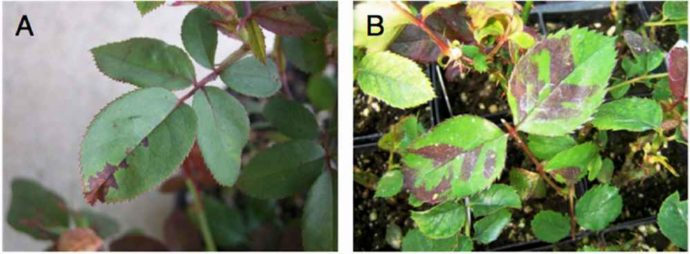
In Peronospora sparsa, the spots are typically angular and confined between the main leaf veins, whereas black spot lesions are circular with ragged edges and tend to merge.
This disease requires high humidity to develop and is therefore more common in greenhouse cultivation than outdoors.
Preventive measures are the same as for black spot, including copper treatments.
For the complete technical sheet on this disease and additional solutions, we invite you to read our full technical guide on rose downy mildew (here).
Powdery mildew of rose
Powdery mildew is a fungal disease caused by Sphaerotheca pannosa var. rosae. It affects roses and other plants in the Rosaceae family.
It appears on green tissues as a white, felt-like mycelial coating resembling mold, initially accompanied by discoloration of affected parts. In advanced stages, infected tissues dry out or become severely deformed.
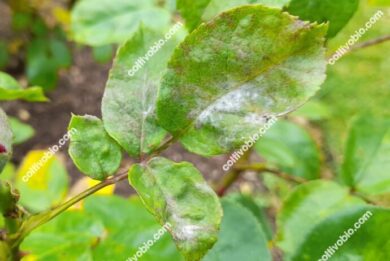
Control measures include removing fallen leaves, including those from previous seasons, as the fungus overwinters in plant debris. During winter pruning, stems that showed symptoms the previous year should be removed.
Preventive sulfur treatments remain one of the main control methods. Natural remedies include sweet orange essential oil and zeolite. Potassium bicarbonate is effective but generally less so than sulfur. Soybean oil, although primarily an insecticide, also has a secondary effect against powdery mildew.
For the complete technical sheet on this disease and additional solutions, we invite you to read our full technical guide by clicking here.
Rose rust
Rose rust is a common disease and is considered the third most serious fungal disease after black spot and powdery mildew. Affected plants develop small amaranth-red spots on the upper leaf surface, surrounded by a lighter yellowish halo. On the underside of the leaves, orange pustules form near these spots, becoming powdery at maturity.
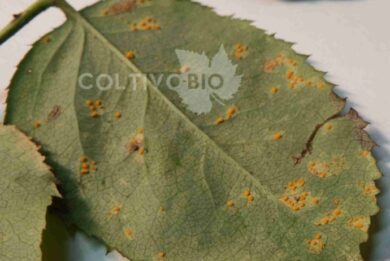
Symptoms may also appear on petioles and young stems. The disease is caused by several fungi belonging to the genus Phragmidium. Infected leaves show spot discoloration and lose photosynthetic capacity. Severely affected plants have poor aesthetic quality and produce fewer flowers.
Several chemical products are registered for control, including copper-based organic formulations, which are preventive. Among strengthening agents, soybean oil can stimulate plant defenses and also help control red spider mites.
For the complete technical sheet on this disease and additional solutions, we invite you to read our full technical guide on rose rust (here).
Brown canker of rose
This disease is caused by the fungi Coniothyrium wernsdorffiae and C. fuckelii. These fungi cause stem cankers. Affected tissues turn brown, collapse, and develop a hazelnut-like coloration.
The infection causes death of tissues above the entry point of the pathogen. After cankers appear, young shoots die and leaves above the affected area wilt. In advanced stages, black dots called pycnidia form on the canker surface; these are fungal reproductive structures that release spores and spread the disease.
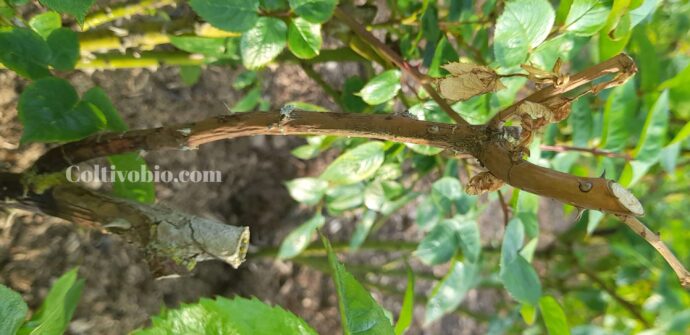
The disease is favored by rainy and humid conditions. The pathogen enters through wounds, especially pruning cuts. Prevention consists of disinfecting pruning tools and applying preventive copper treatments. Infected plant parts should be removed or burned. Control is mainly preventive, since no fungicide can stop the fungus once established inside the plant.
Fungicides used on roses
- Sulfur: https://amzn.to/44cYH7j
- Copper: https://amzn.to/4gpw9ij
- Bacillus subtilis: https://amzn.to/4vhK6DH
- potassium bicarbonate: https://amzn.to/4we0MMz
Damage agents: insects
Roses are attacked by various insects and mites. Below are the most important ones and their control methods.
Rose sawfly
Claudius pectinicornis is a hymenopteran insect whose larvae damage plants in the Rosaceae family, particularly cultivated roses.
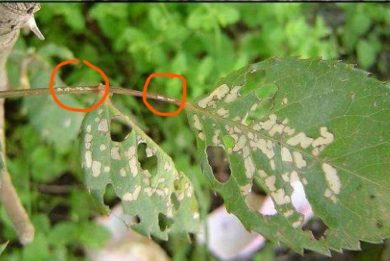
Females lay eggs by making linear incisions on leaf petioles (see red cirles on the image above). Larvae feed from the underside of leaves, leaving the upper surface and veins mostly intact, producing a skeletonized and transparent appearance.
Currently, pyrethrum is the most commonly used insecticide for controlling it. Spinosad is not specifically registered for roses but has activity against sawfly species in general. Mineral oil also has some effect.
For the complete technical sheet on this pest and additional solutions, we invite you to read our full technical guide on rose sawfly (here).
Rose argid sawfly
The rose argid is an insect that damages roses in both larval and adult stages. Adults resemble small black wasps with a yellow-orange abdomen and transparent wings.
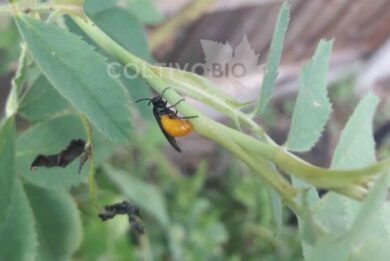
Larvae are voracious leaf feeders and often appear in groups. Unlike sawfly larvae, they feed from the leaf edges inward, sometimes leaving only the central vein.
Adults lay eggs by cutting young stems with an ovipositor, causing tissue deformation or drying. Control is similar to that for sawflies, using pyrethrum and mineral oil; spinosad also has a secondary effect.
For the complete technical sheet on this pest and additional solutions, we invite you to read our full technical guide on large rose sawfly (here).
Rose aphid
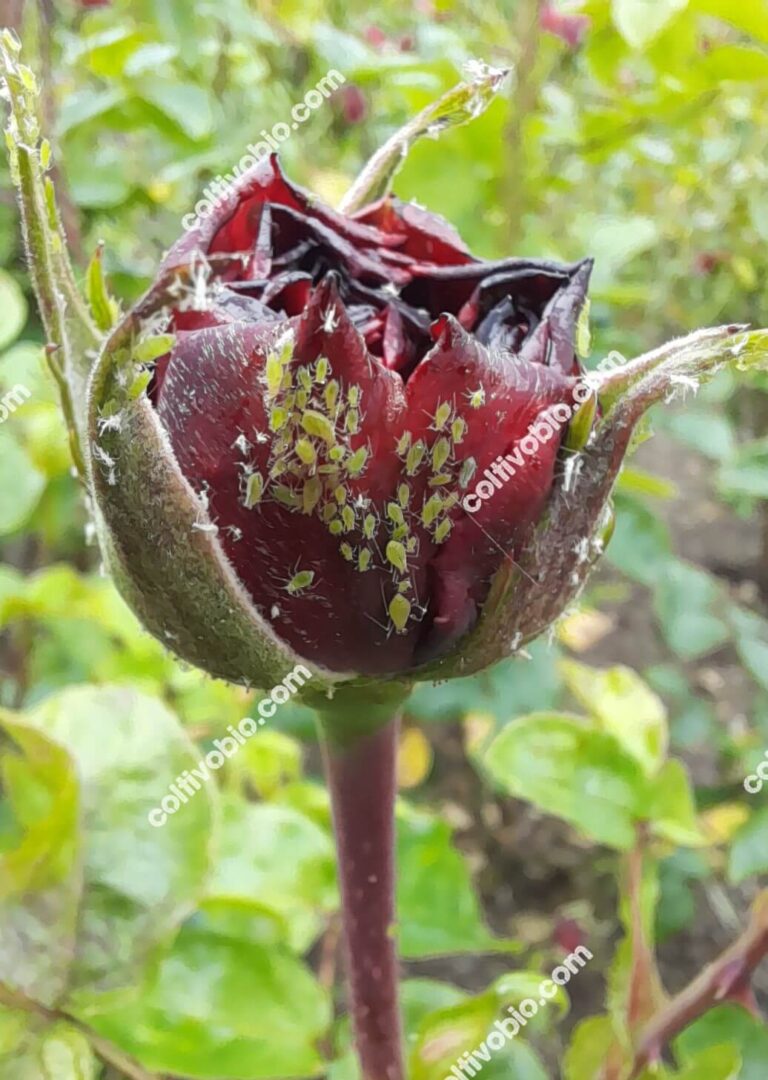
Several aphid species may infest roses, especially in spring and summer, the most common being Macrosiphum rosae. Aphids cluster on flower buds, shoot tips, and young foliage.
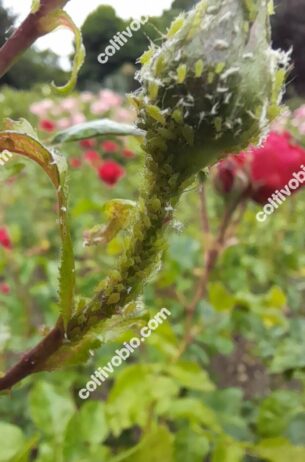
Their presence is often indicated by white shed skins (exuviae). They produce honeydew, a sticky substance that can lead to black sooty mold, reducing photosynthesis and weakening the plant.
Control is relatively easy. Pyrethrum is effective, as are mineral and vegetable oils and insecticidal soap, which act by direct contact. Natural predators such as Aphidius colemani, ladybirds, and hoverflies are important biological control agents. Care should be taken when using pyrethrum because it also affects beneficial insects.
Red spider mite
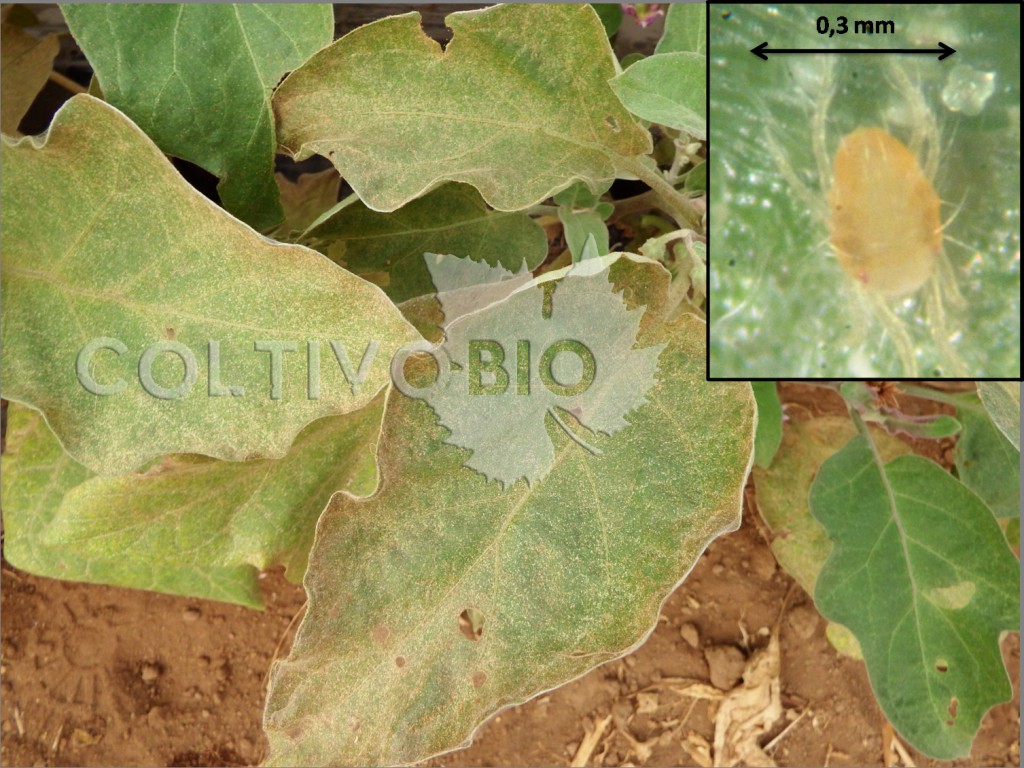
The red spider mite is a mite that attacks many ornamental and agricultural plants. Symptoms include leaf discoloration and bronze speckling. Small mites may be visible moving on leaf surfaces. As infestations progress, fine webbing develops.
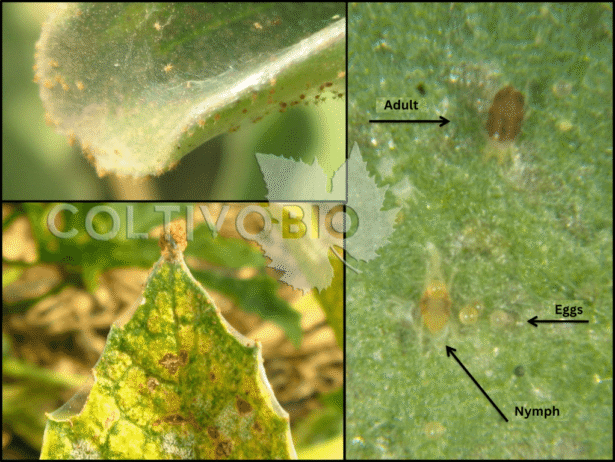
These mites prefer high temperatures and humidity but are negatively affected by rain.
Sulfur treatments act as repellents. Mineral and horticultural oils and insecticidal soap help by suffocating all life stages. Since this is a mite, standard insecticides are ineffective and may worsen infestations by killing natural predators.
Thrips
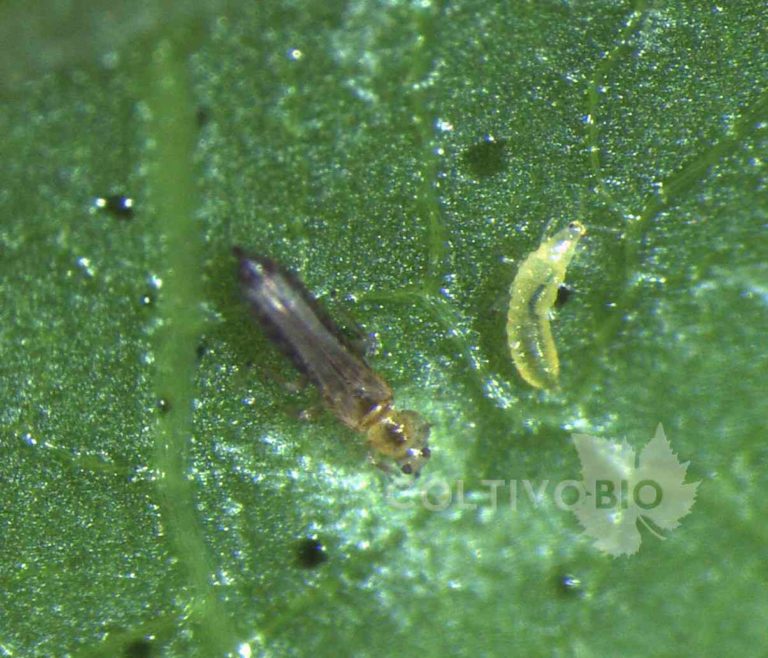
Thrips can damage roses, though they are less common outdoors than in greenhouse cultivation. They are tiny insects (up to 1.4 mm long) visible to the naked eye.
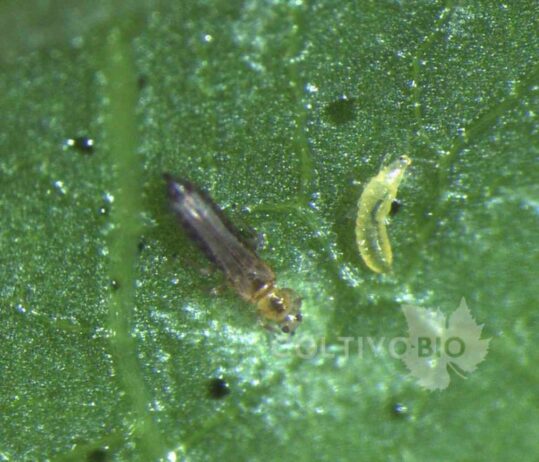
Both adults and larvae feed by sucking plant fluids. Their saliva contains toxins that kill plant cells, causing discoloration and tissue deformation.
When control is needed, azadirachtin or spinosad are preferred. Contact insecticides require high concentrations but may harm beneficial insects. Professional growers often use blue sticky traps to monitor populations and release beneficial species such as Orius laevigatus and the predatory mite Amblyseius cucumeris.
Whitefly
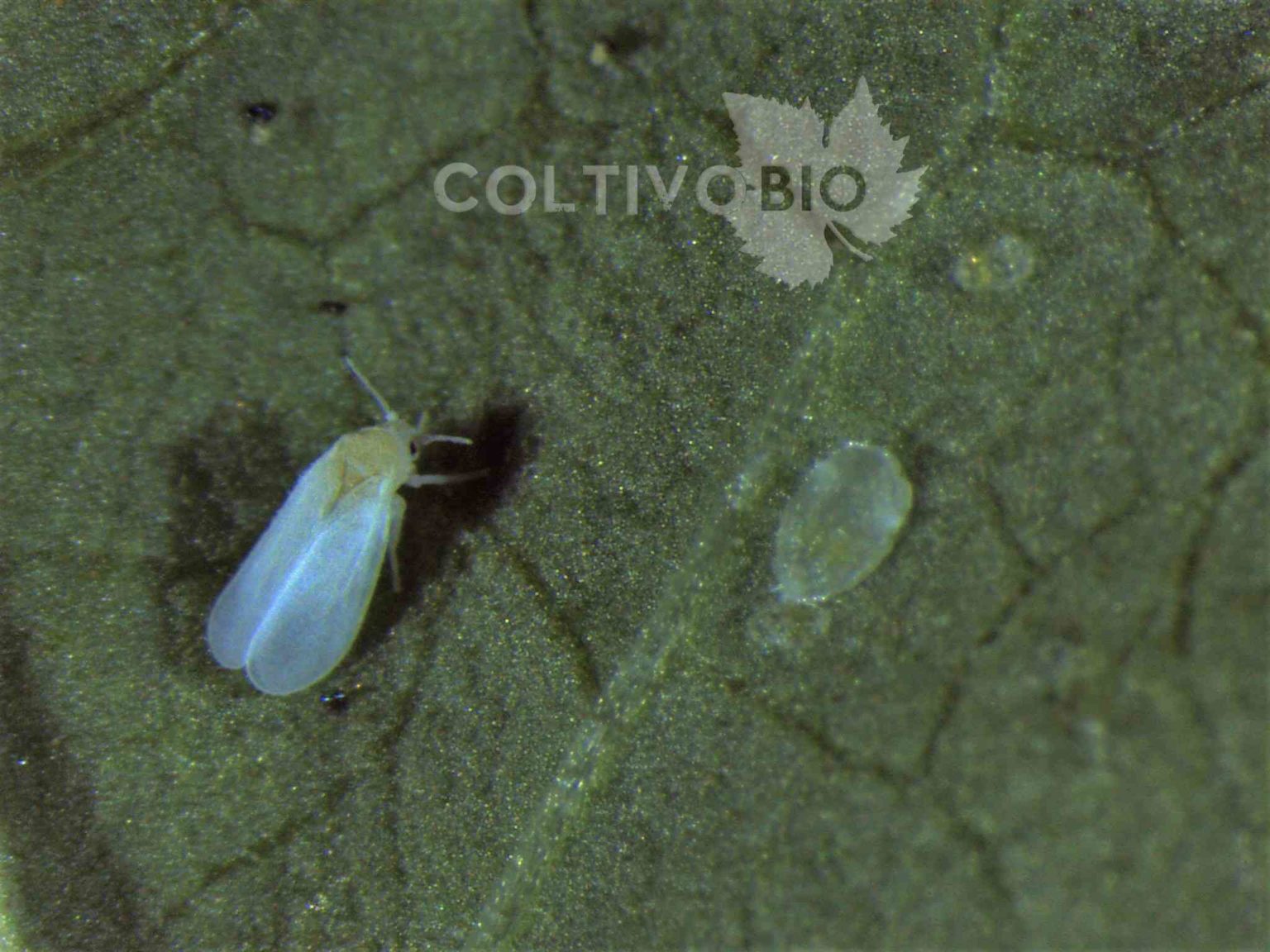
Whitefly generally causes limited damage to outdoor roses but can be problematic in greenhouse cultivation. Adults resemble tiny white gnats about 2 mm long. Immature stages (nymphs) remain attached to the underside of leaves.
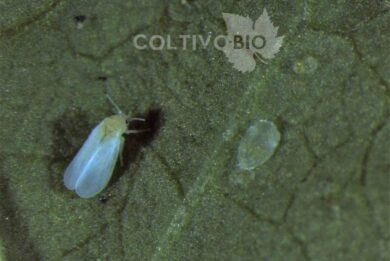
Damage mainly results from honeydew production, which encourages sooty mold and reduces photosynthesis. In greenhouses, this can significantly affect crop quality.
Biological control involves releasing beneficial insects such as Encarsia formosa and Eretmocerus mundus. Pyrethrum is used against adults, while azadirachtin and mineral oil target nymphs. insecticidal soap is also effective but requires thorough coverage of leaf undersides.
Useful insecticides for roses
- Spinosad: https://amzn.to/4cvS0lu
- Potassium soft soap: https://amzn.to/4ibBdI9
- Contact insecticide: https://amzn.to/4a3z78e
- Bacillus thuringiensis: https://amzn.to/4xFxUyf
- Neem-oil: https://amzn.to/4a4mcTy
- Horticultural oil-insecticide: https://amzn.to/4aFfOlV
- Pyrethrum: https://amzn.to/4eqNwMX
Physiological disorders
Iron deficiency
One of the most common physiological disorders in roses is iron deficiency. It appears as yellowing between leaf veins while veins remain bright green. Iron is essential for chlorophyll formation and plant energy processes.
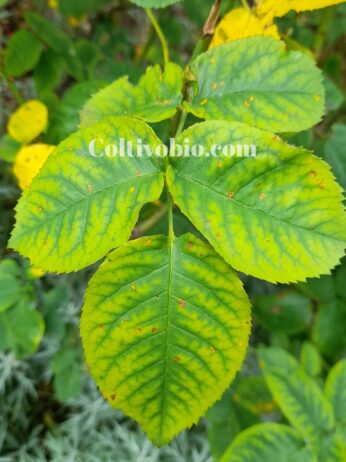
Deficiency may result either from a lack of iron in the soil or from insoluble iron compounds that make it unavailable to the plant. Soil pH plays a key role: alkaline soils reduce iron availability.
Solutions include applying iron (preferably chelated) via foliar spray and soil application. In cases related to high pH, soil acidification using acidic fertilizers or granular sulfur can help release unavailable iron, although this takes time.
Nitrogen Deficiency
Nitrogen deficiency resembles iron deficiency but affects the entire leaf, including veins. It usually appears on young leaves and results in smaller leaves and shoots. Plants produce fewer flowers and show stunted growth.
Short-term correction involves foliar nitrogen application, followed by root fertilization with urea or ammonium sulfate combined with organic matter such as manure or compost.